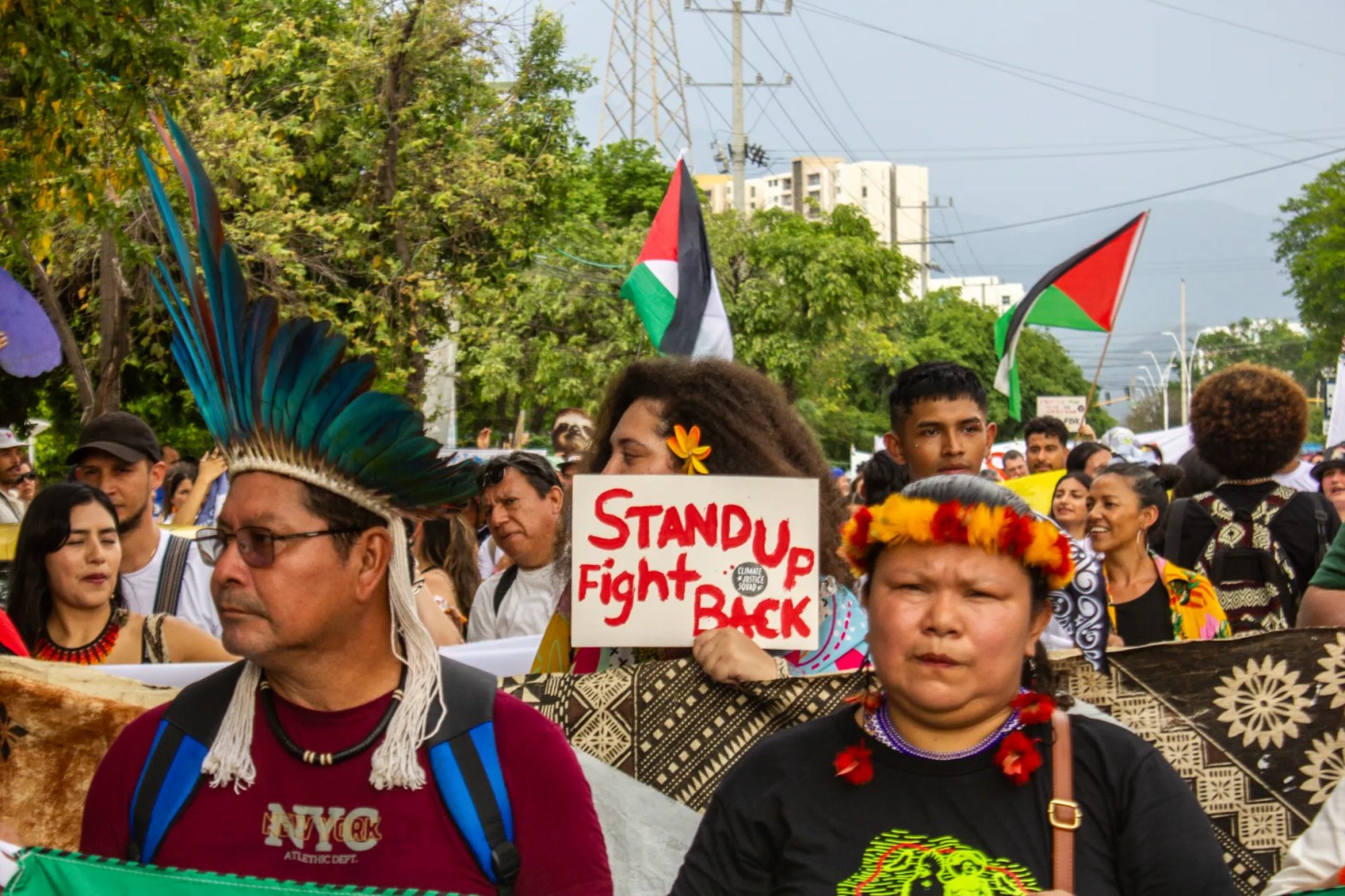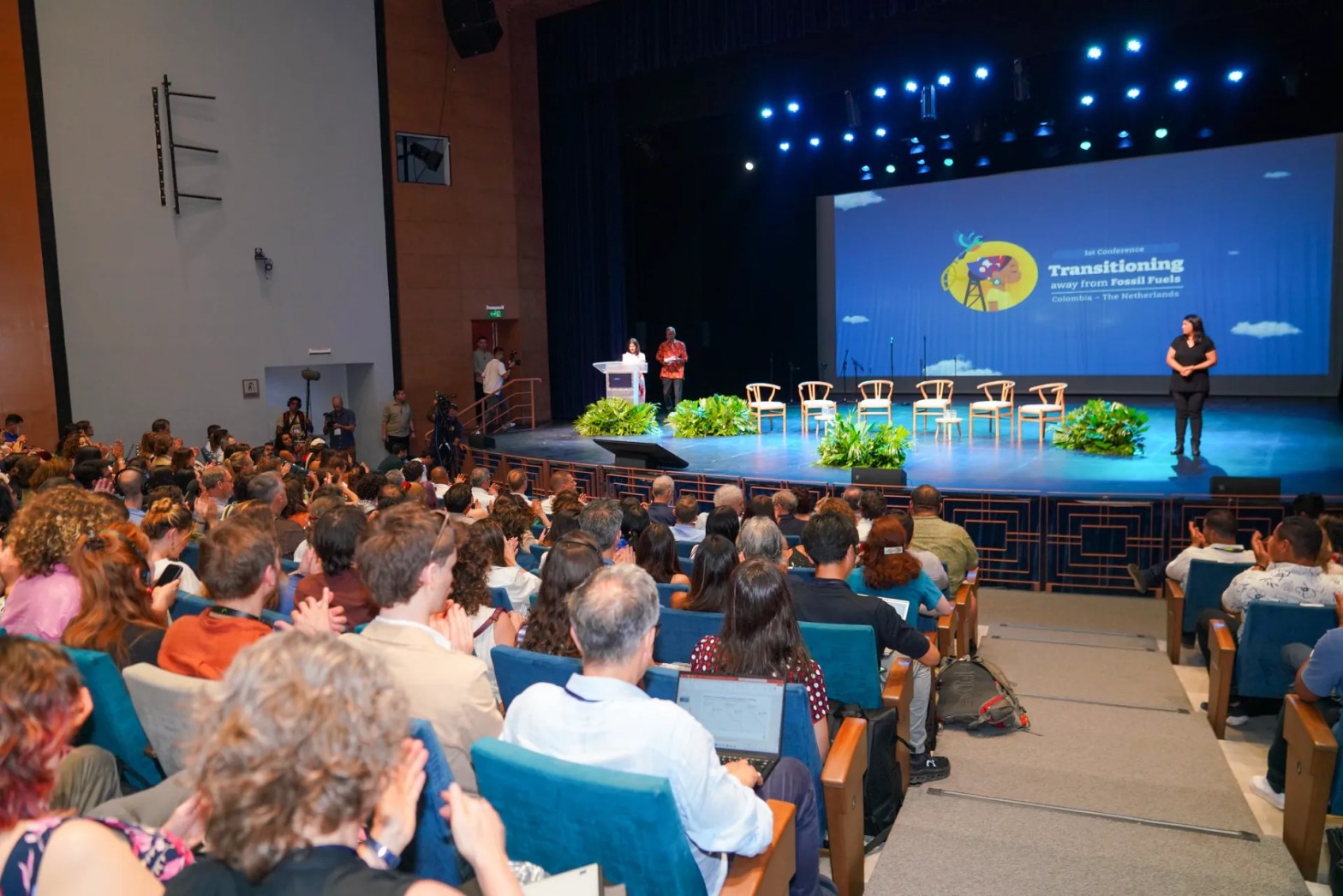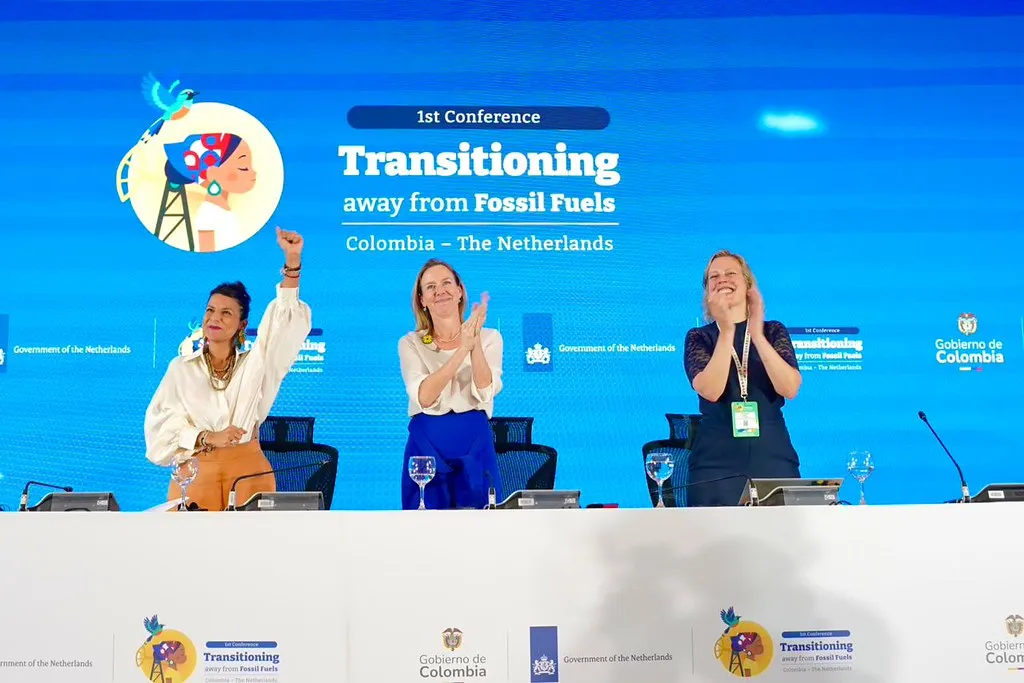


The 1st Conference for the Transition Away from Fossil Fuels for the first time brought together countries willing to discuss how to leave oil, gas and coal behind, concluding with clear signs it will not be a one-off event but the start of an ongoing transition. Brazil arrived as a pivotal player in the debate but left embarrassed after the publication of its proposed national energy transition plan.
“We children are affected by fossil fuels and climate change. We are not only the future, but also the present.” In a speech that drew a standing ovation at the closing of the 1st Conference for the Transition Away from Fossil Fuels on April 29, 10-year-old Paula Padrón, a member of Colombia‘s Civil Society Council for Children, delivered a rare moment of hope even for the most skeptical attendees. Her remarks shifted the debate from technical abstractions to the human stakes, from a distant future to immediate reality.
With scientific data, including the finding that “8 out of 10 children in Colombia are impacted by the use of fossil fuels,” and the unfiltered candor of childhood, she distilled six days of discussions among representatives from 57 countries, responsible for roughly a third of the global economy, into just two minutes and twenty-nine seconds. During the conference, governments debated how to build a planet no longer dependent on oil, gas and coal, guided by a shared premise: the climate crisis is no longer a future projection but a concrete reality that cannot be deferred.
Alongside Paula Padrón, who represented youth at the plenary, Indigenous and rural leaders, scientists and government ministers also took the floor. The final plenary cemented goals, coordination structures and above all the assurance that Santa Marta will mark the beginning of a continuous transition.
Among the central commitments is the development within a year of national roadmaps detailing how each country intends to move away from oil, gas and coal. It is an unprecedented step in climate multilateralism. These plans are expected to complement existing Nationally Determined Contributions (NDCs), which outline emissions targets, and address long-overlooked areas such as the impacts of exported emissions generated by domestically produced fossil fuels consumed abroad.
This was the first time in more than 30 years of climate negotiations that a coalition of countries gathered specifically to discuss how to abandon heavy fossil fuel use. Although COP28 in Dubai acknowledged the need to transition away from these energy sources, the agreement offered no guidance on how that transition should unfold. Santa Marta moved directly into that gap: beyond reiterating well-established environmental and climate science, the meeting examined concrete pathways, political costs and economic implications.
“It’s the beginning of a new global economy,” said Colombian Environment Minister Irene Vélez Torres, who hosted the conference, co-chaired with the Netherlands. The outcomes from Santa Marta will be sent to the presidencies of COP30 (Brazil) and COP31 (Turkey) to shape decisions within the United Nations’ formal negotiating spaces.
Coalition of the willing
Altogether, 15 sectors submitted contributions toward a shared commitment among member countries. Indigenous communities warned that the energy transition must not replicate the mistakes of the last century, particularly the expansion of strategic mineral extraction in their territories. Social movements strongly advocated for a Treaty on the Non-Proliferation of Fossil Fuels aimed at establishing a binding legal framework to halt the expansion of coal, oil and gas production.
“This is the coalition of the willing, this is the coalition of the doers, and we want it to grow,” said Dutch Climate Minister Stientje van Veldhoven, who co-led the Santa Marta conference alongside Vélez Torres.
This is the coalition of the willing, this is the coalition of the doers, and we want it to grow.
Dutch Climate Minister Stientje van Veldhoven
The French government used the gathering to announce new targets for phasing out fossil fuels beginning in 2040, including in French Guiana, a strategic region along the Amazon’s equatorial offshore oil frontier.
But the most vulnerable nations set the tone of urgency. Representing Tuvalu, one of the countries most threatened by rising sea levels, Maina Talia, the island nation’s minister of institutional relations, environment and climate, said the meeting signaled a new phase in global climate action. “The world is going through a crisis of fossil fuels, conflict and instability, but here in Santa Marta we are planting the seed of solutions,” he said.
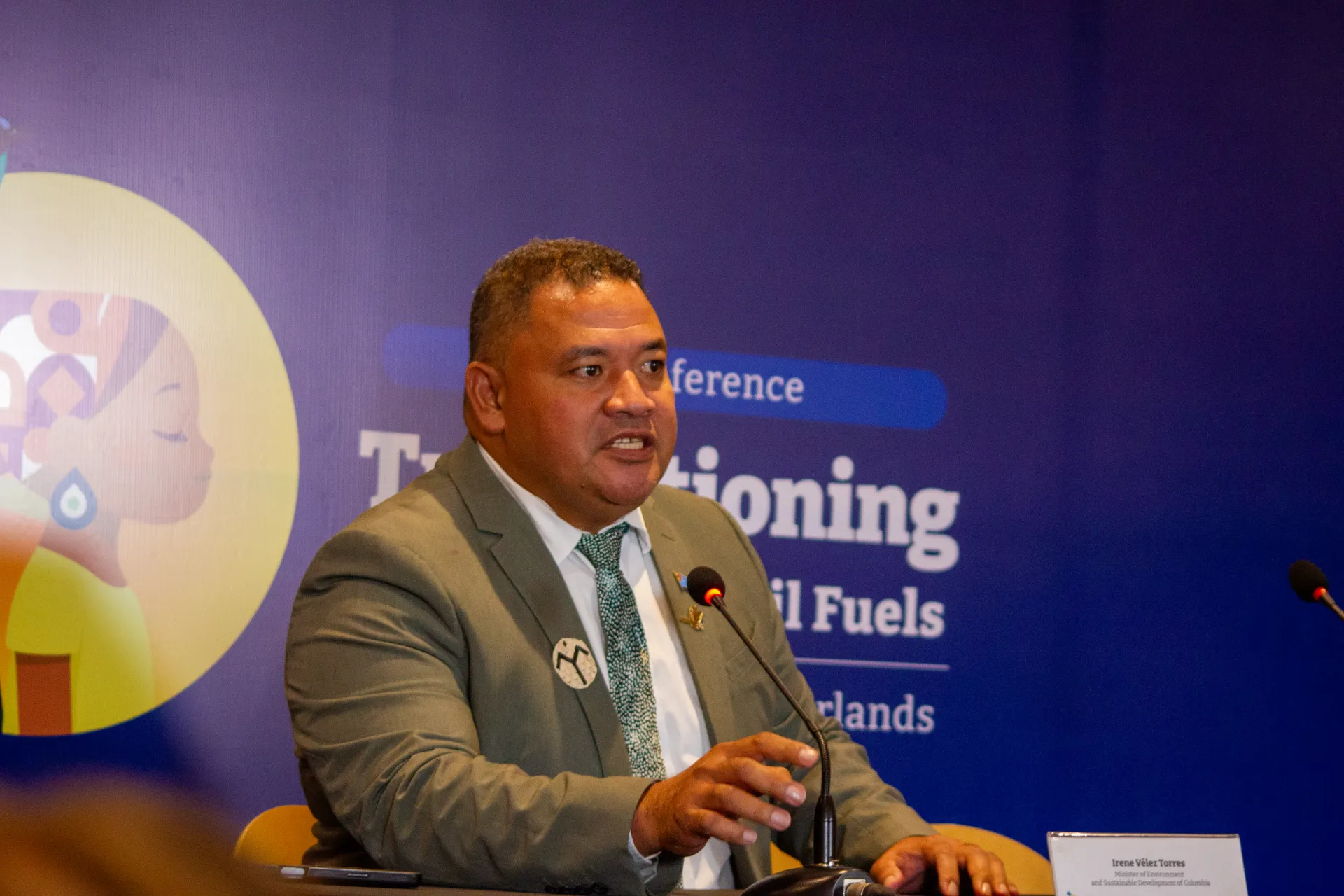
The world is going through a crisis of fossil fuels, conflict and instability, but here in Santa Marta we are planting the seed of solutions.
Maina Talia, Tuvalu’s minister of institutional relations, environment and climate
The Pacific island nation will host the next edition of the conference in 2027, with Ireland as co-chair. The goal is to expand the coalition by bringing in countries that were absent, such as China, and those that opposed the proposal to create a roadmap at COP30 in Belem.
“This conference in Santa Marta was an important space to put the just energy transition on the agenda ahead of COP31. There is good will and a new impetus that deserves to be celebrated,” said Laura Caicedo, campaigns coordinator for Greenpeace Colombia.
Progress
On a practical level, alongside the national roadmaps, the conference established the Scientific Panel for the Global Energy Transition to support governments in shaping public policies and aligning decisions with the goal of limiting warming to 1.5°C. The panel will serve as an advisory body to help countries and organizations carry out their transition policies.
To ensure continuity, an international coordination group was created with participation from countries including Brazil, the United Kingdom, France and Denmark. The next Conference for the Transition Away from Fossil Fuels is scheduled for 2027 in Tuvalu, with Ireland as co-chair.
Rachel Kyte, the United Kingdom’s special envoy for climate change, emphasized that the meeting focused on practical action, “with maturity on something that touches the heart of economic and energy security,” adding, “It’s been a long time since I’ve been to a meeting on climate negotiations where the atmosphere was respectful and positive.” She continued: “The last thing anyone wants from this conference is another burden, another document to produce. It’s not about documents. It’s about processes.”
The last thing anyone wants from this conference is another burden, another document to produce. It’s not about documents. It’s about processes.
Rachel Kyte, the United Kingdom’s special envoy for climate change
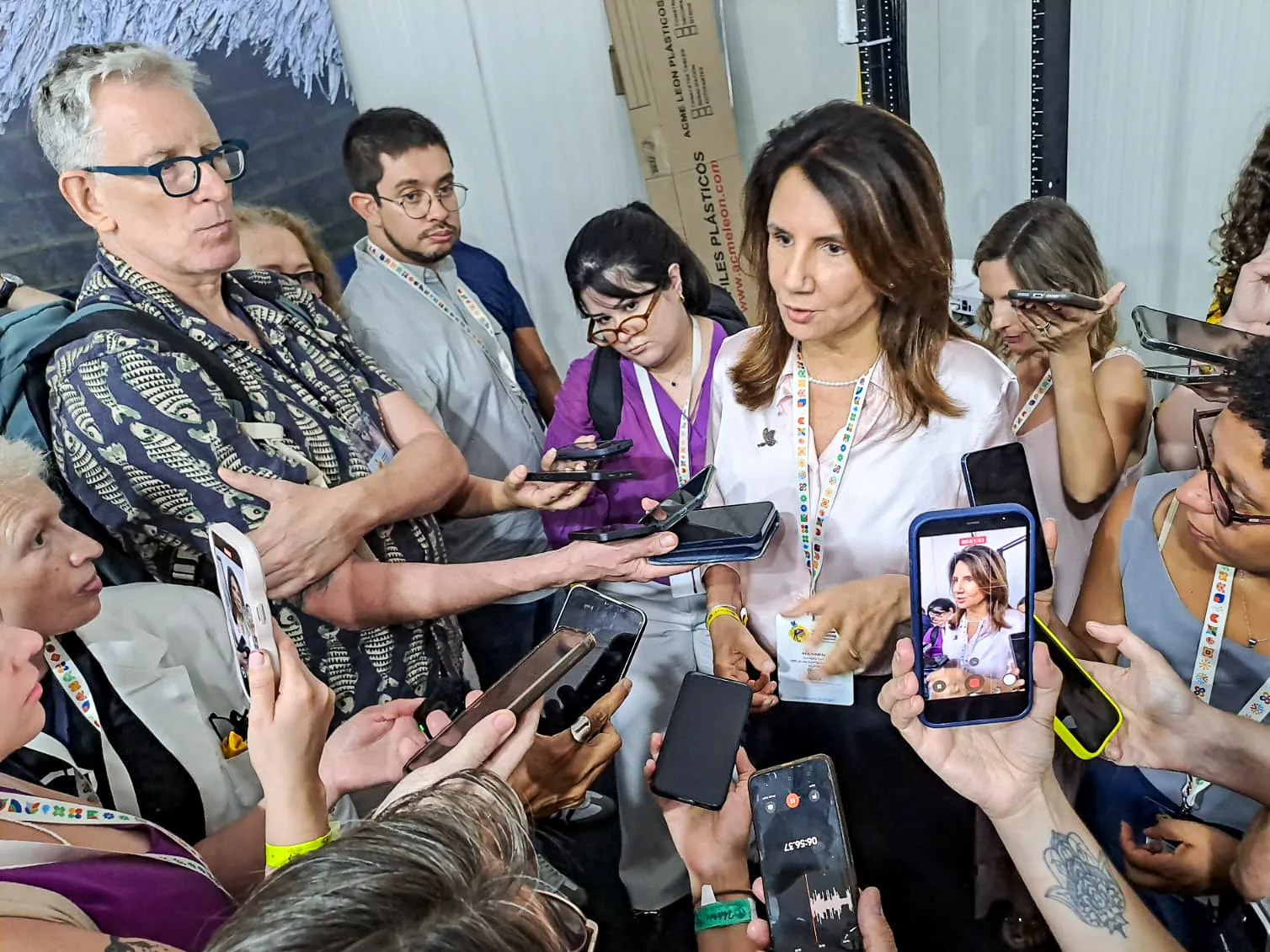
Present at the meeting, Ana Toni, executive director of COP30, noted that Santa Marta emerged as a direct response to the limitations of the recent multilateral process. The conference is in many ways an outgrowth of frustration with the UN meeting in Belem, which concluded without clear targets for phasing out fossil fuels.
The proposal presented by President Lula (PT) during COP30, the creation of a global “road map” for ending fossil fuels, was diluted in the final negotiating text due to political pressure from major producers. In Santa Marta, however, with the goal of having other countries put forward their own national plans, the idea gained momentum and took the form of a more concrete commitment. According to Ana Toni, the results of the meeting in Colombia should feed directly into the international process and contribute to the global roadmap the COP30 presidency aims to present this year. “We’re going to take the inputs we’re hearing here to our road map,” she said.
She emphasized that the meeting’s greatest value lay in its collaborative structure. “It was a genuine exchange, something we really needed,” she said, noting that the gathering made it possible to share concrete experiences, fiscal challenges and potential pathways for the transition.
“It’s not just about negotiating, as happens at COPs, but about understanding what each country is doing and how we can learn from each other,” said Ana Toni.
It’s not just about negotiating, as happens at COPs, but about understanding what each country is doing and how we can learn from each other.
Ana Toni, executive director of COP30
Science at the heart of the debate
While governments have begun to move, scientific research has pushed the debate further. During the panels, scientists from various fields outlined pathways for a transition already underway, fueled by technological and economic shifts, from the rise of electric cars to the rapid expansion of solar and wind power increasingly operating without dependence on fossil fuels.
Science was one of the conference’s defining features. Researchers not only underscored the urgency of climate change but also showed how economies dependent on fossil fuels can and must pivot. “Technologies beat commodities on cost, and renewables are already cheaper than fossil fuels in most parts of the world,” said economist Mark Campanale, CEO of Carbon Tracker, explaining why the fossil industry has already missed the economic shift underway.
For him, the energy transition is no longer solely a climate imperative but is now driven by a market logic that is hard to reverse. “We are replacing a system based on finite, expensive and inefficient fuels with one that is cheaper, distributed and technologically superior,” he said, noting that this model, built over decades, “can be replaced much faster than we think.”
That assessment is gaining international traction. In an interview with The Guardian published on the conference’s opening day, Fatih Birol, head of the International Energy Agency, said the recent oil crisis, intensified by conflict in Iran, has structurally transformed the fossil industry. For him, transitioning to a global economy without fossil fuels is no longer hypothetical but inevitable.
Martí Orta, a researcher at the University of Barcelona and contributor to the scientific recommendations, was even more blunt. “It’s not enough to stop exploration or gradually reduce it. We need to cancel most of the existing contracts.” He said already-signed fossil fuel commitments are enough to exceed safe global warming limits, making immediate action unavoidable.
“We’re too late in the fight against climate change. The effects are already evident all over the world, and this is just the beginning of what lies ahead,” he said in an interview with InfoAmazonia.
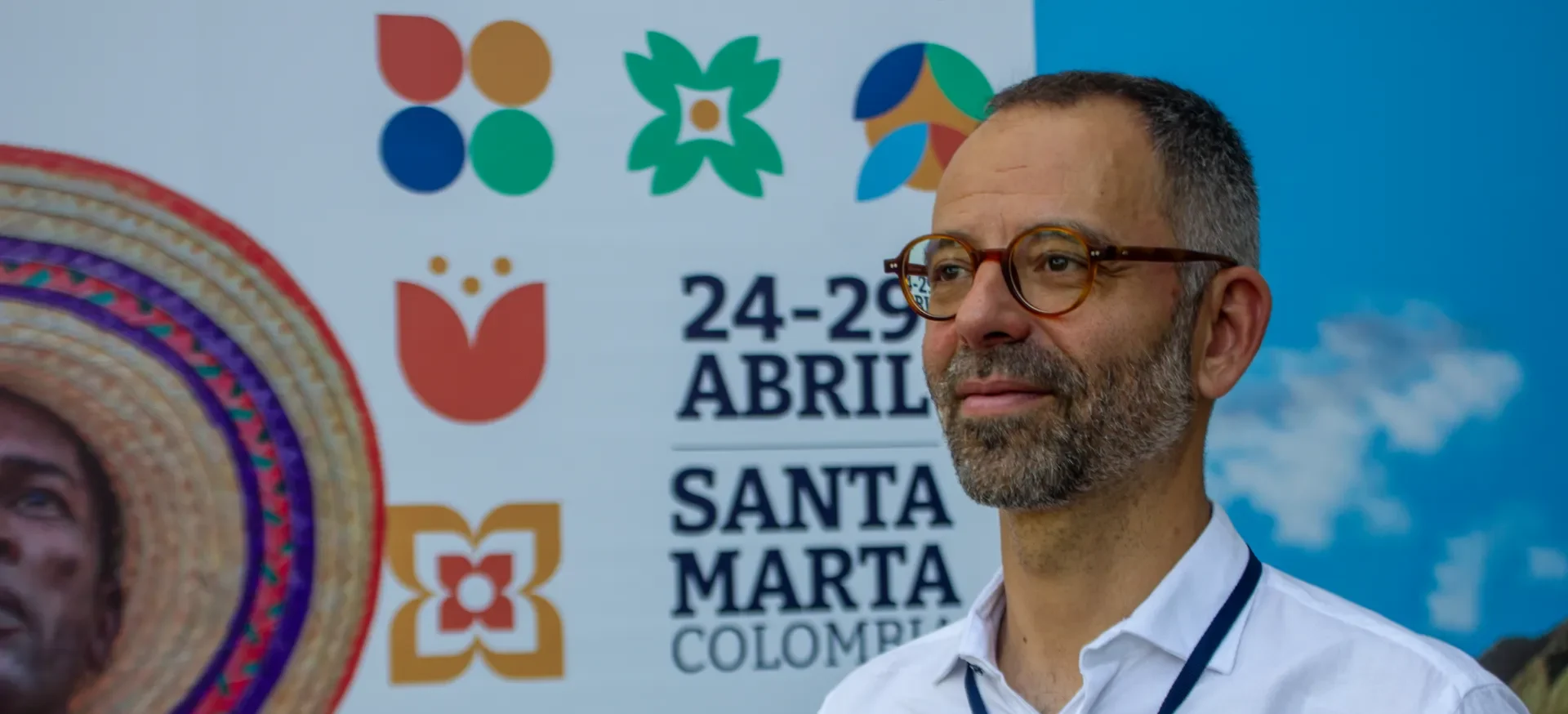
Even as the scientific diagnosis grows more conclusive, implementation remains fraught with political conflict. “The scope of the conference is very different from what we usually see at COPs. Here we don’t have the same constraints as the UN process, and this allows for a much more direct exchange between countries and scientists,” said Ricardo Baitelo of the Institute for Energy and the Environment (IEMA), cautioning that an effective response “will always be political,” a reality the conference laid bare.
“Even without consensus at the UN, many countries have already begun their transitions. What Santa Marta shows is that there is a viable path outside formal negotiation, based on cooperation and learning among countries,” he added.
Brazil: From Leadership to Embarrassment
On one hand, Brazil’s COP30 presidency was frequently cited in speeches, especially for advancing the proposal for a global roadmap to end fossil fuels. On the other, the Brazilian government adopted a low-profile stance in Santa Marta, avoiding greater exposure of its own internal contradictions.
Despite recent gains in combating climate change, such as strengthening environmental agencies and creating structures to plan medium- and long-term energy transition, the main source of tension lies in the present: the national roadmap for ending fossil fuels, promised by the Brazilian government, remains unpublished and bogged down in disputes between the Ministry of the Environment and Climate Change (MMA) and the Ministry of Mines and Energy (MME).
In addition, plans by Petrobras and U.S. and Chinese oil companies to expand into the Foz do Amazonas basin along the equatorial margin contradict the climate, economic and social warnings discussed in Santa Marta.
The campaign to open this new exploratory frontier has gained political backing from President Lula himself, under pressure from members of Congress and the oil lobby. Central to the dispute is the licensing of Block 59, which experts view as a “smokescreen” for expanded exploration throughout the region and which places Brazil’s international rhetoric at odds with its domestic decisions.
The embarrassment grew in the final hours of the conference, when the MME released a proposed National Energy Transition Plan that retains oil, gas and coal in Brazil’s energy mix until 2055.
The reaction was swift. The Climate Observatory, a coalition of 172 civil society organizations, said it does not recognize the document as the “road map” requested by President Lula. The group argued the plan should have been developed collaboratively across ministries with public participation and should lay out a genuine strategy for phasing out fossil fuels rather than extending their use beyond mid-century.
“It’s an embarrassment for Brazil, praised as the proponent of the road maps in Santa Marta, that a transition plan that doesn’t make a transition is presented by a Lula minister while 60 countries are trying to have a serious debate here in Colombia on how to get off fossil fuels,” said Claudio Angelo, international policy coordinator at the Climate Observatory.
For Baitelo, “Brazil’s current picture is still positive, with a high share of renewables, but it’s starting to hit limits. The oil bottleneck continues,” he said.
The IEMA expert told InfoAmazonia that strategic decisions remain constrained by economic dependence on oil and political interests.
“We’re facing a kind of crisis in the electricity sector, with wind and solar energy being wasted, and some industries in this sector leaving Brazil. Meanwhile, we can’t move on the other part, which is the most important—oil. We’re living through a fossil-fuel lock-in, where many decisions need to be made, but the government is clearly very tied to Petrobras and national oil. It’s not just an energy issue. It’s a question of the economic model,” he said.
Opening photo: Ministers Irene Vélez Torres of Colombia and Stientje van Veldhoven of the Netherlands led the conference in Santa Marta. Photo: Fábio Bispo/InfoAmazonia
This report was produced with support from the Global Greengrants Fund and the Climate and Land Use Alliance.