
Representatives of Indigenous Peoples from different countries are asking that projects using critical minerals or related to the green economy, such as carbon credits, be based on the premise of not affecting Indigenous rights and their territories. Furthermore, they demand a leading role in conferences, not only when proposing solutions, but also when making decisions alongside governments.
In a joint statement, Indigenous leaders criticize the energy transition model that repeats the pressures and threats of fossil fuel exploitation. According to the document, the current climate agenda risks reproducing the exploitation framework that has historically sustained the oil, gas, and coal economy by betting on the extraction of strategic minerals and green economy mechanisms, such as the carbon credit market, which may continue to threaten territories.
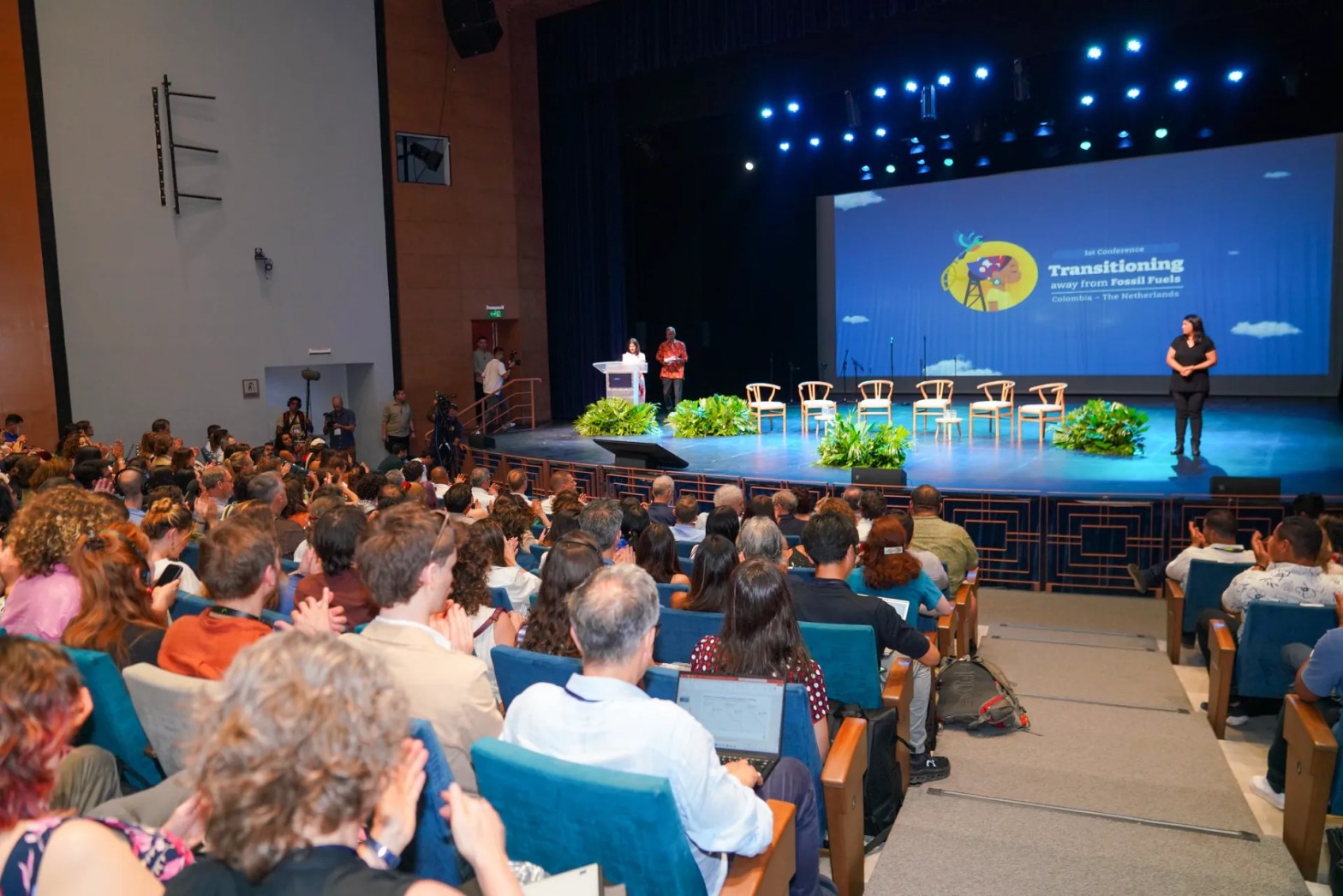
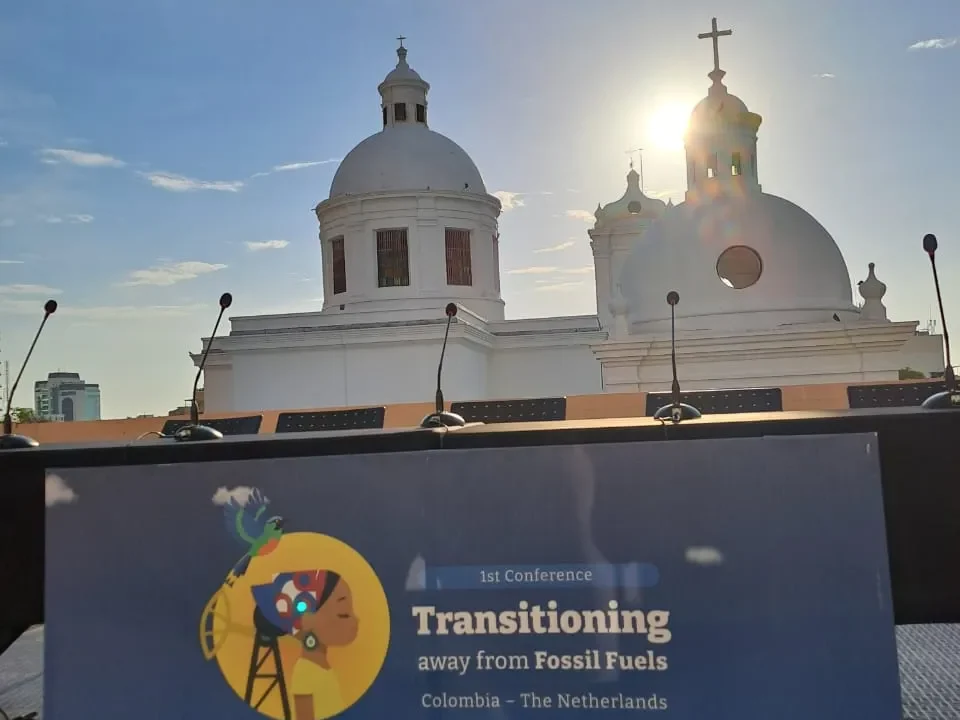
The consolidated stance on the topic represents indigenous organizations from different regions of the world and was presented on Monday (27), during the First Conference on Transition Away from Fossil Fuels, in Santa Marta, Colombia. “We cannot continue to accept the system that waters down the issues, our plight, our internationally recognized inherent, distinct, and collective rights, to usher in a new form of colonialism cloaked as a just transition,” said Australian leader Larissa Baldwin Roberts, who presented the indigenous peoples‘ view at the conference.
We cannot continue to accept the system that waters down the issues, our plight, our internationally recognized inherent, distinct, and collective rights, to usher in a new form of colonialism cloaked as a just transition.
Australian leader Larissa Baldwin Roberts
The document increases pressure on governments meeting in Santa Marta with the promise of seeking mechanisms that reshape the global economy away from oil, gas and coal. The Indigenous Peoples’ declaration was sent to representatives of the 56 countries that attended the high-level meeting, which is expected to end this Wednesday (29). They are also expected to analyze proposals submitted by scientists, non-governmental organizations, the private sector, parliamentarians, labor unions, banks and multilateral organizations.
Exploration-free Indigenous territories
As a result of the Santa Marta conference, Indigenous communities demand the creation of exploration-free zones in their territories. The proposal provides for a ban on new oil, gas and coal concessions as well as strategic minerals and other projects, and a review of enterprises that are underway.
Indigenous Peoples’ main criticism is that the energy transition has been conducted under the logic of profit and control, without breaking away from the exploitation model. According to their leaders, this is reflected both in the expansion of fossil fuel projects and in the global race for strategic minerals, which are essential for renewable energy models — as raw materials for wind turbines, solar panels, storage batteries, among others.
Another core point of the declaration is the demand for direct participation by Indigenous Peoples not only when proposing solutions, but also when making decisions together with governments on the climate policies adopted by the countries participating in the conference. “You want our pictures and not our voices. You want our stories and not our struggles,” said Roberts, who underscored that Indigenous people must consent to any project that interferes with their territories and ways of life.
The declaration also advocates that climate finance be given directly to communities, without intermediaries, in order to strengthen their own, regenerative economies. They demand guaranteed protection of environmental defenders and specific measures for the defense of Indigenous Peoples in voluntary isolation, considered especially vulnerable.
“We are strategic partners in the climate agenda,” stated Oswaldo Muca, coordinator of the Organization of Indigenous Peoples of the Colombian Amazon (OPIAC). “There is no just transition without respect for the rights of Indigenous Peoples, and there is no effective transition without our leadership and contribution,” he added.
Brazil’s contradiction
The Brazilian government’s stance at the conference was also criticized by Indigenous participants. Representing the peoples of the Brazilian Amazon, Luene Karipuna, a leader of the Uaçá Indigenous Territory in Amapá state, said that the country arrives at the conference with proposals to end the use of fossil fuels but keeps its plans to expand oil exploration in the Amazon, potentially impacting territories and protected areas.
“The biggest contradiction in Brazil is its discourse that opening a new front for fossil fuel exploration is necessary for the energy transition,” said Luene Karipuna, referring to statements by President Lula da Silva and other government officials who defend the use of oil exploration to finance the country’s transition. However, Petrobras’ 2026-2030 business plan has been recently disclosed, reducing investments in energy transition by 20%.
“I believe that Brazil needs to reassess this path towards moving away from fossil fuels and consider that this transition needs to be done through dialogue with people, because what we have seen is the government discussing the energy transition in closed offices, without social participation, without participation by Indigenous peoples and traditional communities,” she argued.
I believe that Brazil needs to reassess this path towards moving away from fossil fuels and consider that this transition needs to be done through dialogue with people, because what we have seen is the government discussing the energy transition in closed offices, without social participation, without participation by Indigenous peoples and traditional communities.
Luene Karipuna, a leader of the Uaçá Indigenous Territory in Amapá state
As a contribution to the discussions, Luene brought to Santa Marta the recommendations of the Indigenous Peoples of Brazil for the path towards the end of fossil fuels. “We came with this mission of saying that a transition cannot be achieved without listening to the peoples and, especially, without our presence in spaces where decisions are made. Our great mission is to include this in the official document [of the conference],” she said in an interview with InfoAmazonia.
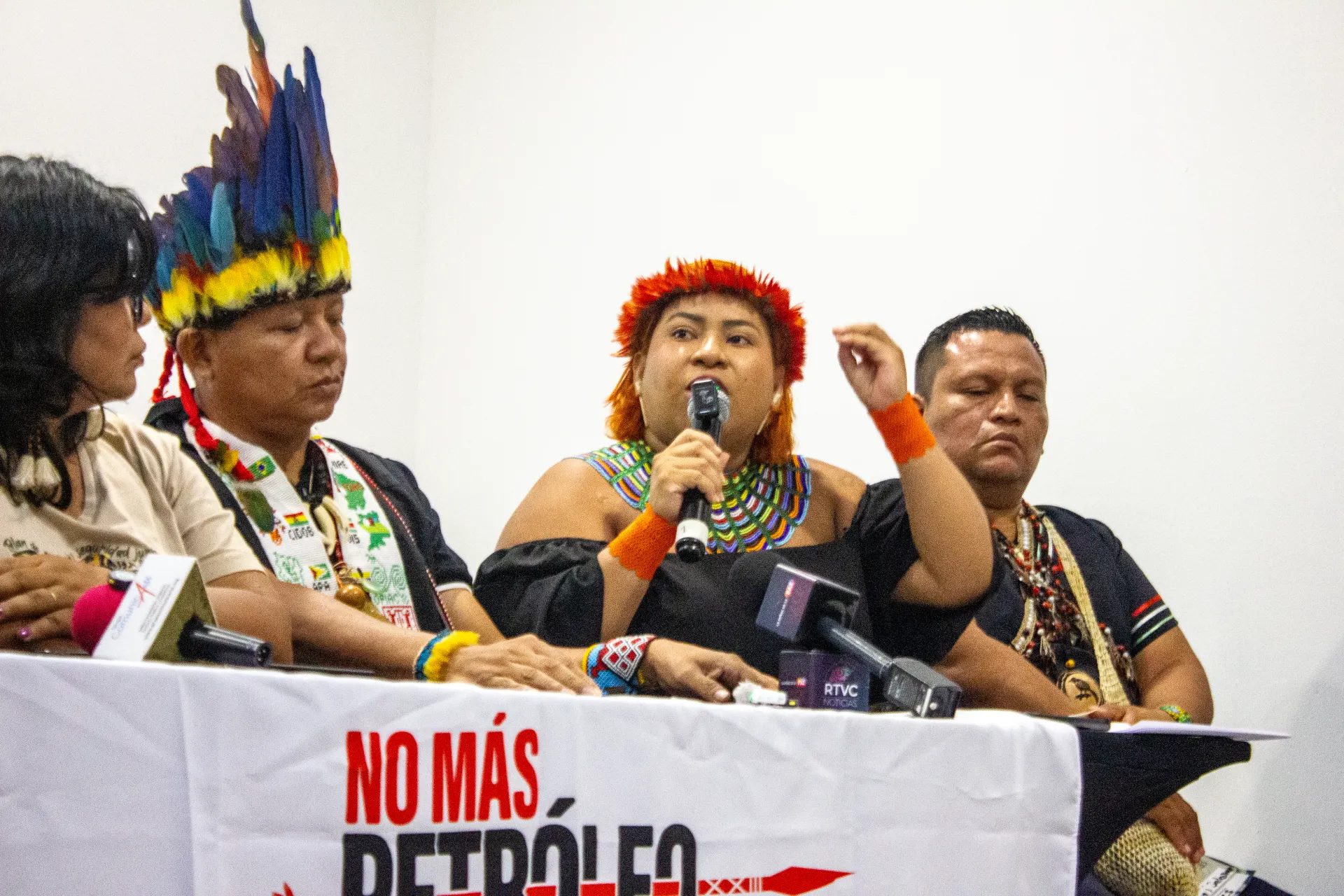
Indigenous Peoples from Ecuador denounce the advance of oil in the Amazon
Even without an official government delegation, Ecuador was present at the conference through Indigenous representatives who denounced the expansion of oil projects in the Ecuadorian Amazon.
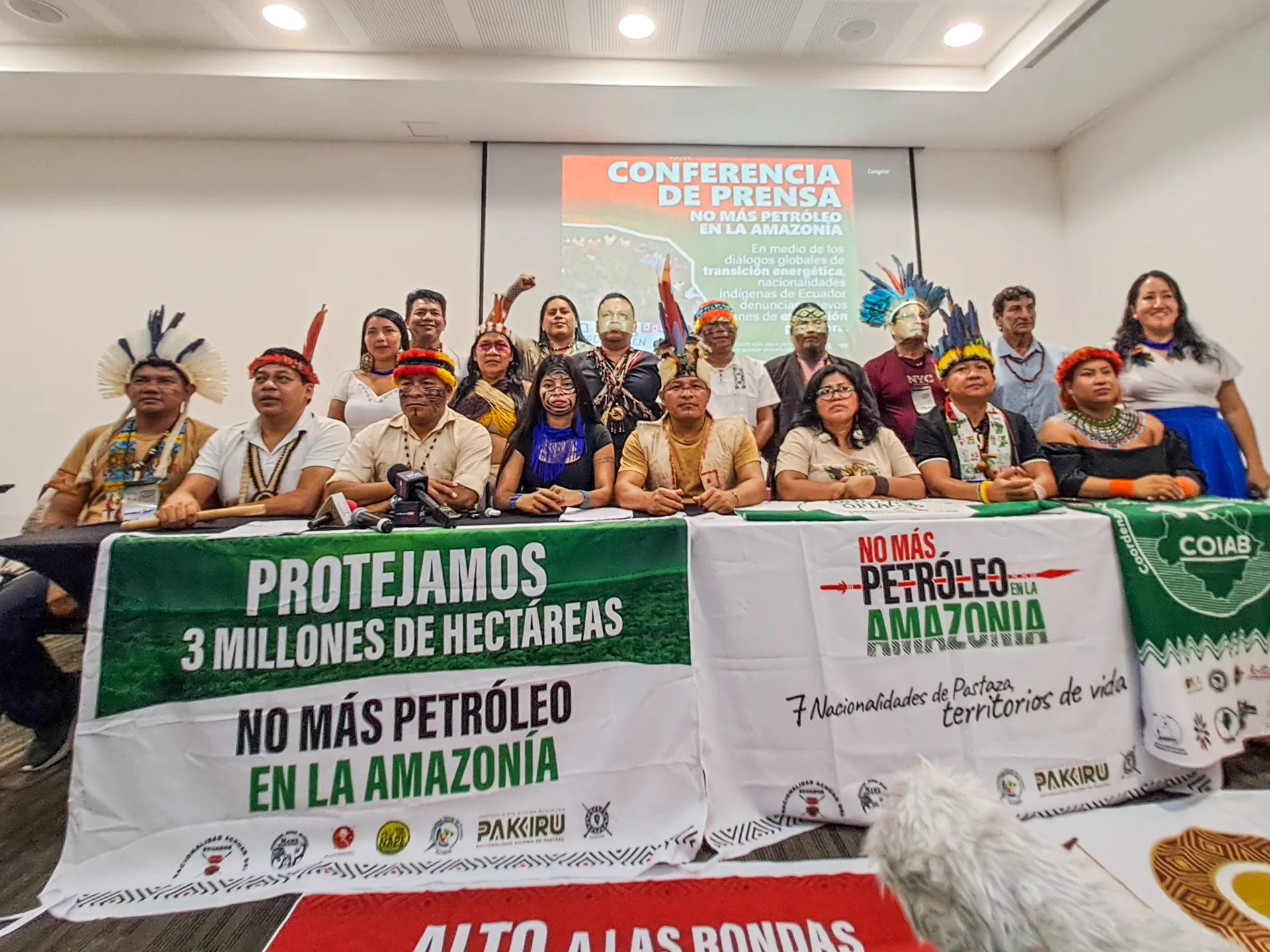
Leaders of seven Indigenous nations criticized the announcement of new exploration blocks totaling millions of hectares in their ancestral territories. According to them, the projects pose risks to communities, rivers and ways of life.
“The Ecuadorian state is threatening our territories with 11 oil blocks. They call them blocks, but they are actually our territories,” underscores Ana Nango, a delegate representing the Andwa Indigenous People.
The representatives also warned of the direct impact on isolated Indigenous Peoples and denounced non-compliance with constitutional and international norms, such as the right to prior consultation with the communities impacted by the projects. In a joint statement, the Indigenous Peoples of Ecuador called for the immediate suspension of bidding rounds in the country. “We are not a sacrifice zone, we are a territory of life,” stated Juan Carlos Ruíz, a member of the Sápara Indigenous People.
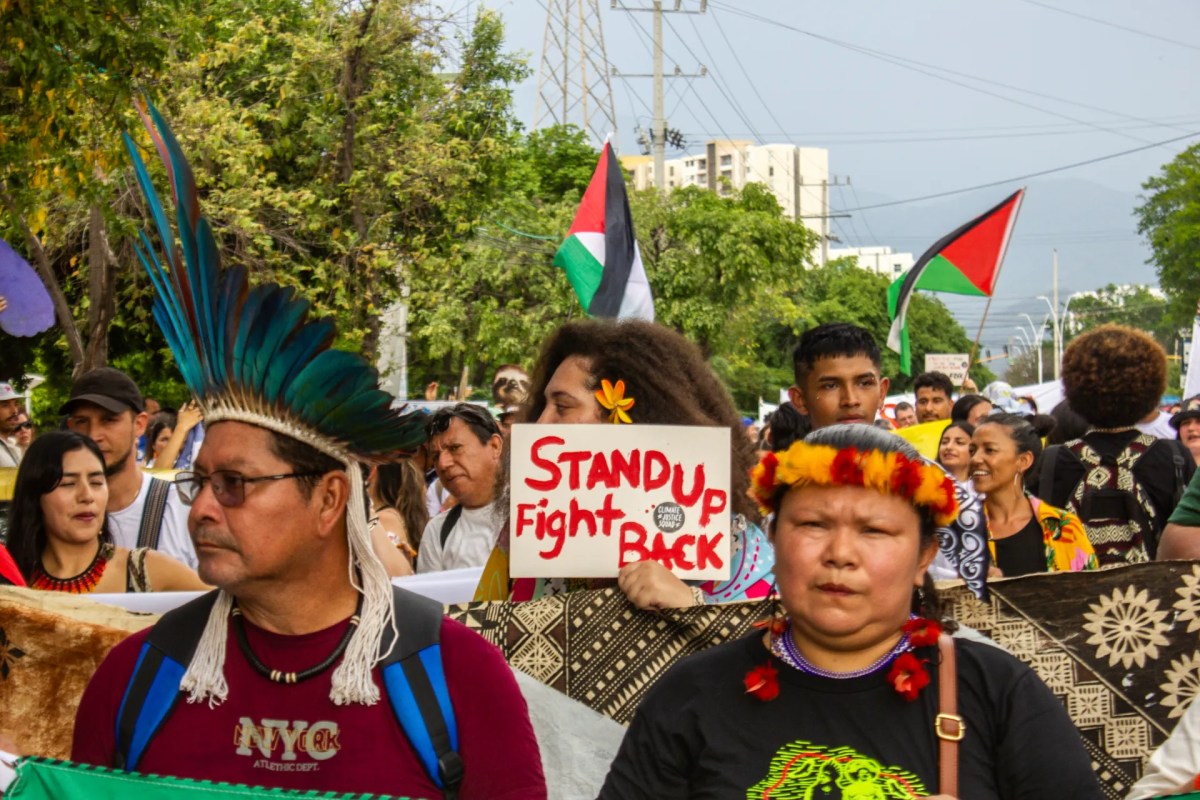
Opening image: A march in Santa Marta, Colombia, brought together Indigenous Peoples, non-governmental organizations, and activists. Photo: Fábio Bispo/InfoAmazonia.
This report was produced with the support of the Global Greengrants Fund and the Climate and Land Use Alliance.