


Operating within the ancestral territory, the Comando Vermelho vies for control alongside schools, health clinics, the local office of Brazil’s federal agency for Indigenous affairs (Funai), garimpeiros and militias, while controlling the machinery driving deforestation in Mato Grosso, a Brazilian state that borders Bolivia.
Category: Indigenous people
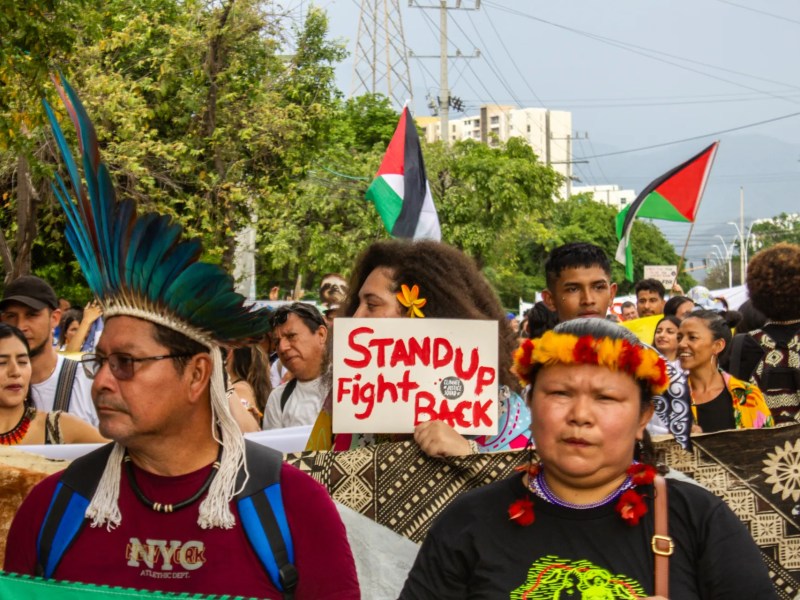
‘Cloaked colonialism’: Indigenous Peoples criticize just transition model that does not protect their territories
Representatives of Indigenous Peoples from different countries are asking that projects using critical minerals or related to the green economy, such as carbon credits, be based on the premise of not affecting Indigenous rights and their territories. Furthermore, they demand a leading role in conferences, not only when proposing solutions, but also when making decisions alongside governments.
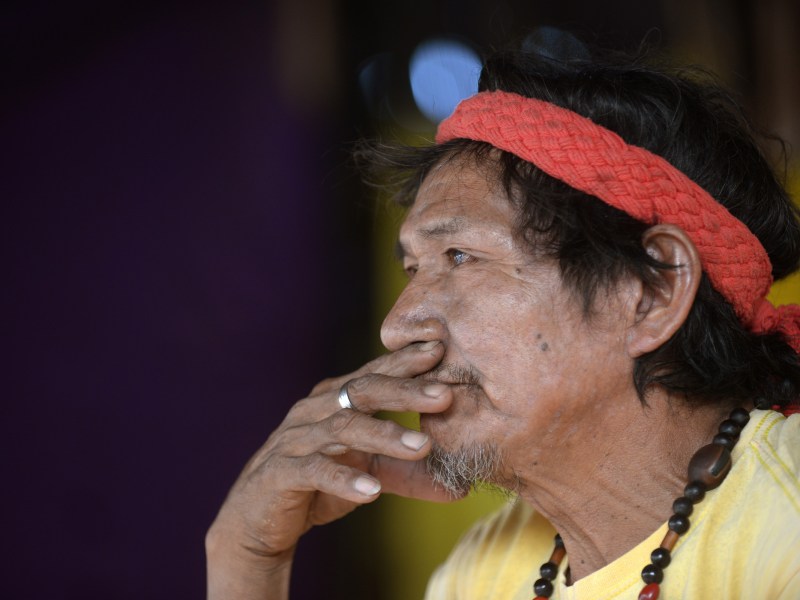
Eneva is authorized to drill the only active gas block on Indigenous Land in the Legal Amazon
Over 75% of the Krenyê territory, in the Brazilian Maranhão state, overlaps a block granted for fossil exploration where drilling could begin in 2026. Allegedly to help the energy transition, expansion of production at the Parnaíba Thermoelectric Complex bets on energy generation and the transformation of the MATOPIBA area into a logistics corridor for gas and grains, impacting quilombola territories and protected areas.
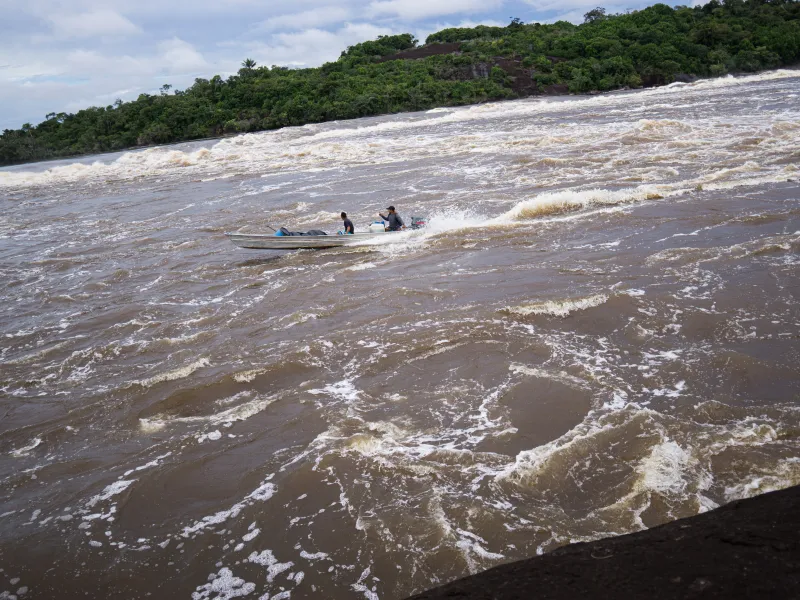
Chorrobocón’s Gamble: Betting on Critical Minerals
In Colombia’s jungles, where the deep green of the Amazon collides with poverty and exclusion, a hidden and dangerous business flourishes. In the remote corners of Guainía, Indigenous communities such as the Puinave find themselves trapped in illegal mining, an activity that allows them to survive but threatens to destroy the land they inhabit. With the decline of gold, strategic minerals have risen as a promise for the future. However, this new mineral rush, which promises to be less polluting than gold mining, carries enormous environmental and social risks.

Women Environmental Defenders from the Amazon and Africa Draw Parallels from the Frontlines of the Climate Crisis at COP30
Juma Xipaia and Joanita Babirye, two leaders from the Global South, report on violence, funding barriers, and the erasure of women in climate policy— and advocate for the conference to recognize those who support real solutions in the territories.
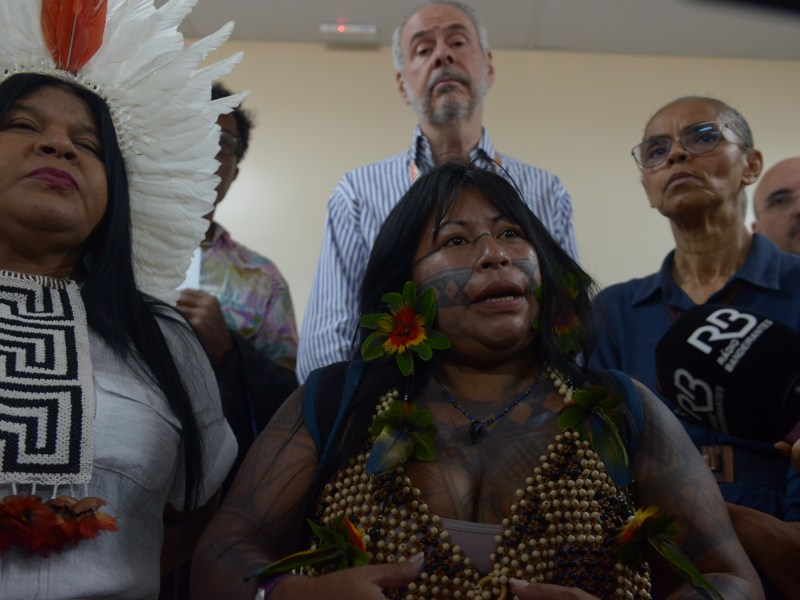
Brazilian government announces demarcation of two Indigenous territories following Munduruku protest at COP30
Munduruku Indigenous People demanded the demarcation of their territories and the revocation of infrastructure projects affecting their lands; the movement held a peaceful demonstration in front of the Blue Zone, a space where climate negotiations take place.
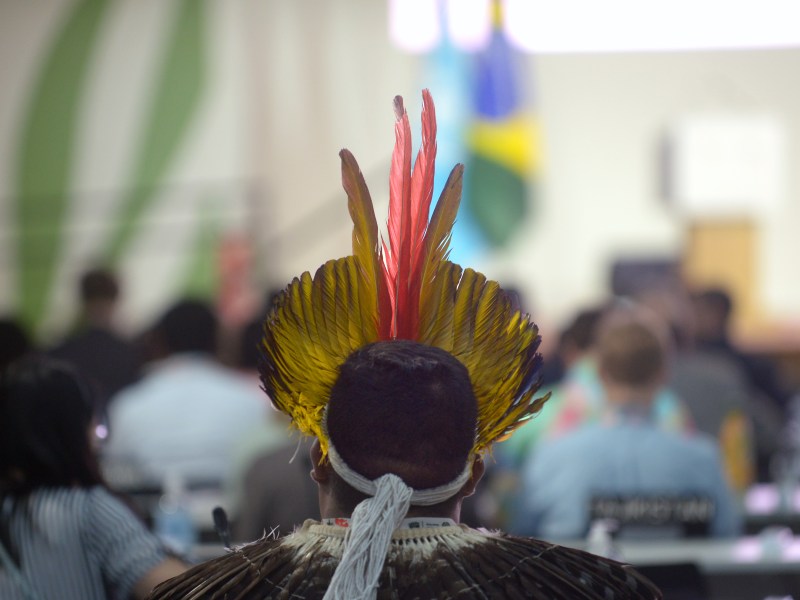
Despite record turnout, only 14% of Indigenous Brazilians are expected to access decision-making spaces at COP30
The Coalition of Indigenous Peoples of Brazil (APIB) estimates 2,500 Indigenous people from across Brazil have gathered in Belém. Leaders are demanding a bigger role in the negotiations and the inclusion of land demarcation as climate policy.

Oil companies exploit Indigenous disputes to dominate territories in Ecuador, filling the role of the state
Over the past 30 years, the three companies that have managed Block 10, an oil extraction site in the Ecuadorian Amazon, have sought to divide local communities and increase their reliance on their corporations. However, Indigenous leaders and organizations are actively pushing back against these efforts.

Colombian and Ecuadorian criminal groups expand their violent influence throughout the Amazon
By Plan V* The Comandos de la Frontera, a Colombian armed group that also operates in northern Ecuador, and the Ecuadorian gang Los Choneros have imposed a regime of terror in the Amazonian provinces of Sucumbíos and Orellana, although the alliances between them are unclear. One of the illegal activities that has grown the most […]
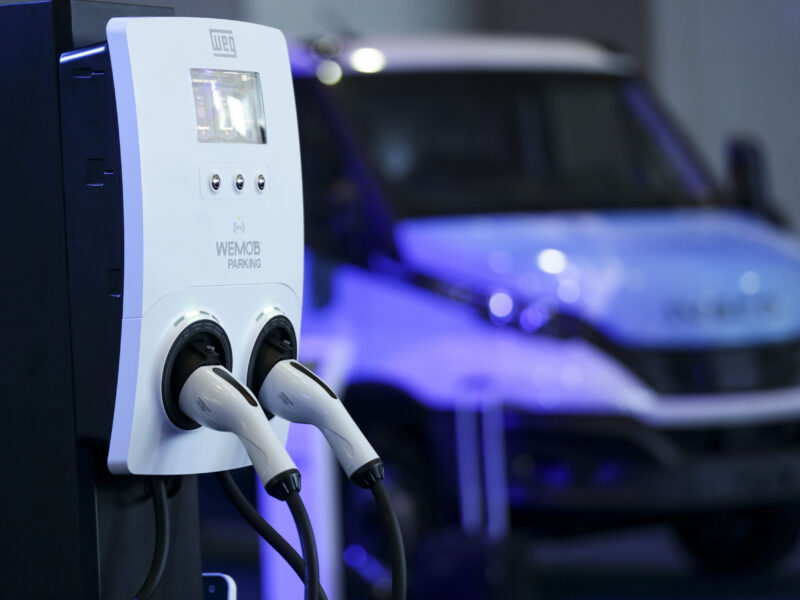
Energy transition creates a race for strategic minerals with 5,000 applications in the Amazon
Copper, lithium and nickel, among others, are raw materials used to produce electric vehicles, batteries, wind turbines, and solar panels. The Amazon holds part of these minerals, and large companies want to exploit it. Most mining applications are in Pará state, and some of them will have direct impact on areas located in Indigenous Lands and Conservation Units.