

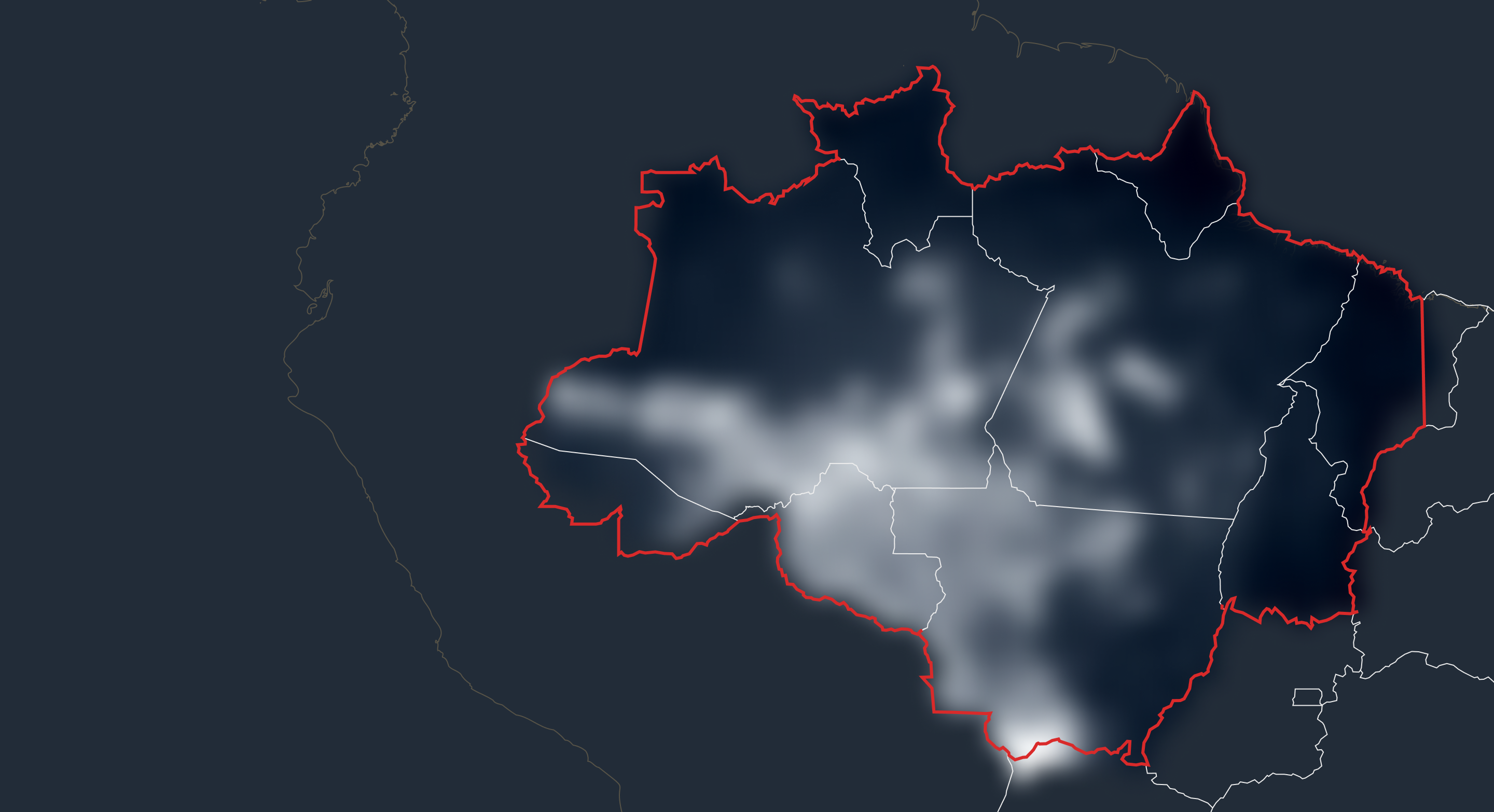
Map from the Inhaling Smoke project shows the average concentration of particulate matter in the 2020 fire season in the Legal Amazon
Source: CAMS-NRT, InfoAmazonia analysis
Inhaling Smoke is a special project that investigates the effects of air pollution caused by wildfires on the health of the Brazilian Amazon population during the pandemic.
In 2020, the tragic combination of the Covid-19 pandemic and one of the most severe cycles of fires and deforestation in the Brazilian Amazon meant that residents of fire-affected regions were also more exposed to the risk of Covid-19 worsening. Breathing, especially in municipalities in the states of Rondônia, Mato Grosso, Acre and Amazonas, has become more dangerous.
This toxic synergy was the object of an unprecedented data analysis carried out by a multidisciplinary team of journalists, geographers, statisticians from InfoAmazonia, in partnership with researchers from LabGama, from the Federal University of Acre, and Fiocruz’s Climate and Health Observatory/ICICT. The project was supported by Stanford University through the Big Local News program, which aims to open up data in formats that can be replicated by journalists around the world.
We analysed satellite data to determine which locations were most affected by air pollution during the 2020 wildfires and how it impacted the health of amazonians. Through extensive data analysis, the project was able to quantify the impact of fire-attributable pollution on the worsening of Covid cases, providing subsidies both for the reader to understand the gravity of the environmental crisis and for the government to make decisions based on the data. Smoke was related to an 18% increase in severe cases of Covid and 24% increase in hospitalizations for respiratory syndromes in the 5 most affected states.
The data reveals how the pollution from the Amazon fires has a perverse effect on the population that is explained by a specific geography of fire – the most affected municipalities, in different states, indicate the expansion of the arc of deforestation. To tell the stories that the data was revealing, we assembled a team of 8 local journalists (reporters and photographers), distributed throughout the 5 most impacted states in the Legal Amazon (Amazonas, Acre, Rondônia, Pará e Mato Grosso). At the beginning of July 2021, part of the InfoAmazonia team traveled along the BR-319 between Humaitá and Porto Velho, to the Chico Mendes Resex (in Xapuri, Acre) and to Poconé, in the Pantanal of Mato Grosso, as well as capturing local stories in different towns in the region.
Five reports were published and gained nationwide attention, driven also by a publishing partnership with the largest national daily newspaper in Brazil and with the two institutions that were partners in the analyses, the Ufac and the Oswaldo Cruz Foundation (Fiocruz), the federal institution of science and technology.
The result of this effort is 5 data-driven special reports, also visualized in maps and graphs, in which we show the relationship between two apparently unconnected events, highlighting how environmental and public health issues are closely linked.
Due to the impossibility of relating all these phenomena in real-time, it was necessary to return to the data collected in 2020 to investigate the hypothesis that Covid-19 cases have been aggravated by the environmental crisis. The importance of a project like this in 2021 is similar to a large-scale post-mortem examination, bringing evidence and proof of the devastation of the Amazon and how this affects its citizens, even those in urban areas far from where the environmental crimes occur.
STORIES IN THIS SPECIAL:
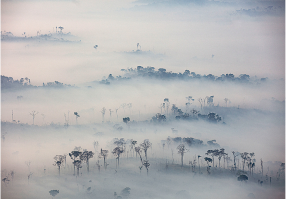
Invisible enemies
Smoke from burnings worsens Covid-19 in the Amazon
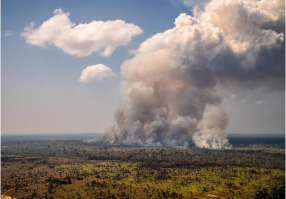
The victims of the geography of fire
The smoke from the fires and Covid sweeps from southern Amazonas to Acre
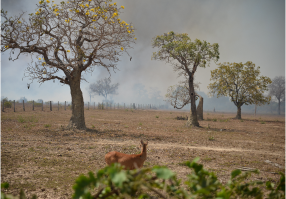
Social and environmental crises come together in Mato Grosso in a year of record burning in the Pantanal
In the rural area, the challenge for residents affected by the smoke is to get medical care
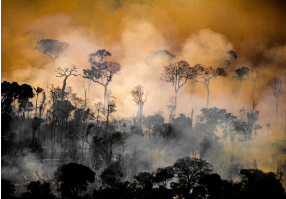
Pollution is one of the footprints in the chain of Amazon destruction
The most vulnerable municipalities are affected by various types of crime
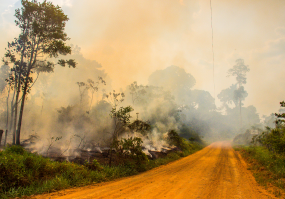
Overcast atmosphere in Acre
As well as the capital Rio Branco, Xapuri and other towns in the interior suffer from pollution above safe limits for human health
COMPLEMENTARY MATERIAL:
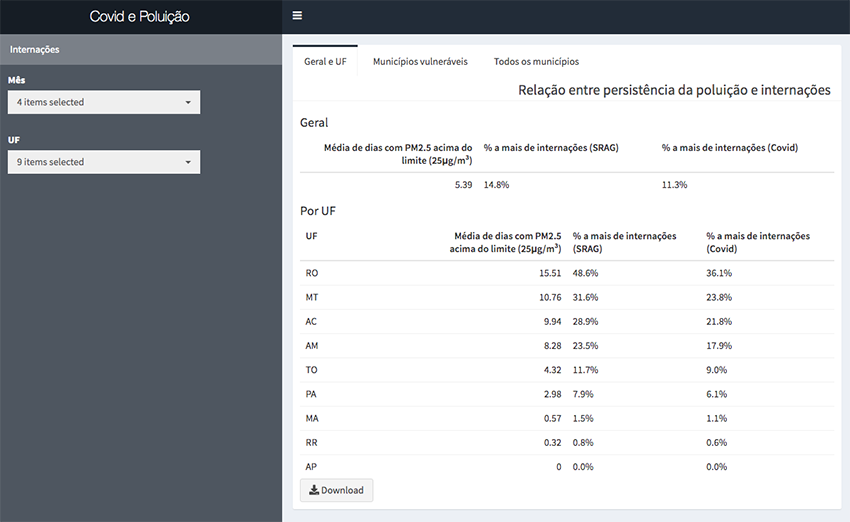
Dashboard
Data from the statistical analysis of the project by all the states and municipalities of the Legal Amazon. Filter by month or geographical location and download the table with your selection.
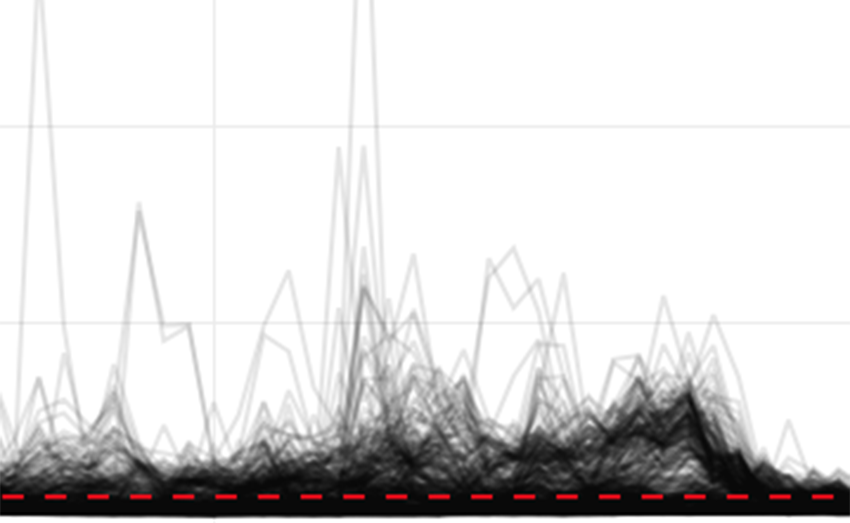
Daily concentration of particulate matter
Interactive graph with the average daily concentration of particulate matter calculated for all the municipalities in the Legal Amazon, from July to October 2020.
Documentation
Comparison and analysis of remote sensing data sources on particulate matter and validation with the portable sensor network in Acre.
See our methodology
Understand how we did the analysis: the selection of data and the variables used to reach the conclusions. Material explaining the process and links to the main data sources.
Team
Juliana Mori
general coordinator and interactive maps
Renata Hirota
statistical analysis
Eduardo Geraque
editor and reporter
Felipe Barros
geospatial analysis
Camilo Estevam
reporter in Rondônia
Sonaira Silva
scientific consulting – LabGama/Ufac
Guilherme Guerreiro Neto
reporter in Pará
Tatiane Moraes
scientific consulting – Fiocruz
Juliana Arini
reporter and photographer in Mato Grosso
Café.art.br
Information Design
Leandro Chaves
reporter in Acre
Leandro Amorim
creative director – Café
Lucas Lobo
reporter and photographer in Amazonas
André Hanauer, Erlan de Almeida Carvalho
design – Café
Rebeca Navarro
reporter in Amazonas
Erico Rosa, Guilherme Lobo, Robson Klein
developing – Café
Ramon Aquim
photographer in Acre
Laiza Lopes
social media texts and strategy
Dell Pinheiro
photographer in Acre
Laura Clisánchez
social media design
Tony Gross
tranlation to English
This project was produced with the support of the John S. Knight Journalism Fellowships and the Big Local News program of Stanford University.