


Half a century of oil exploration has left the world’s largest rainforest scarred by deforestation, water contamination and air pollution. Indigenous lands have been infringed and economic disparities exacerbated. Now a new wave of drilling threatens to perpetuate this destructive legacy.
Category: Regions

How did we investigate oil data in the Amazon?
Por Renata Hirota April 1, 2025 This story is part of the special series EVERY LAST DROP Since July 2024, the cross-border project Every Last Drop has investigated and mapped available data on oil and gas exploration across the Amazon, focusing on the biome’s reach into Brazil, Colombia, Ecuador, Guyana, and Peru. The analysis used […]

Highway BR-319: Researchers analyze impacts on public health while residents demand better medical care
Residents who live along the highway support its repavement in the hope of improving access to medical care, but scientists are expanding research that warns of an increase in the spread of infectious diseases due to deforestation stemming from the road.
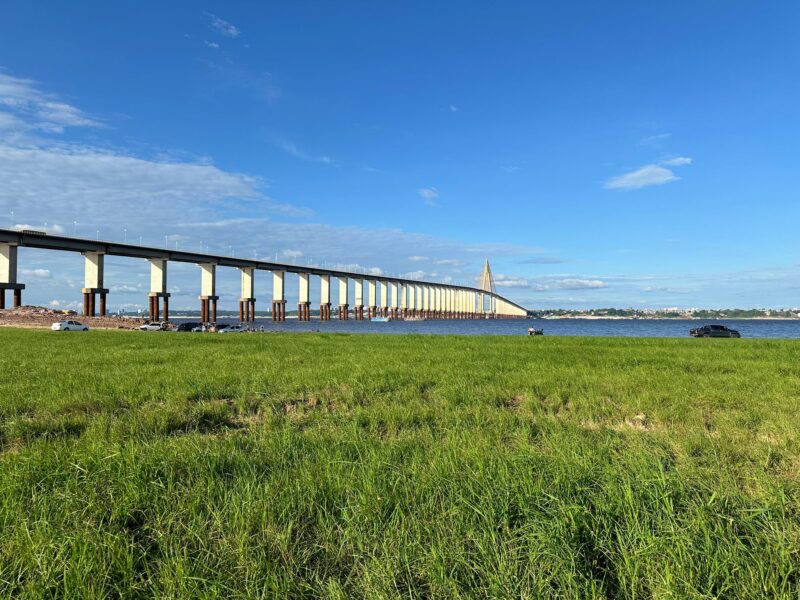
Extreme drought creates new park in Manaus, but abnormal vegetation puts ecological balance at risk
On the banks of the Rio Negro, Manaus residents take advantage of the grass that has appeared during the dry season, creating a space for relaxation. But as the river returns to its normal level, the vegetation could cause environmental imbalance and even spread disease.
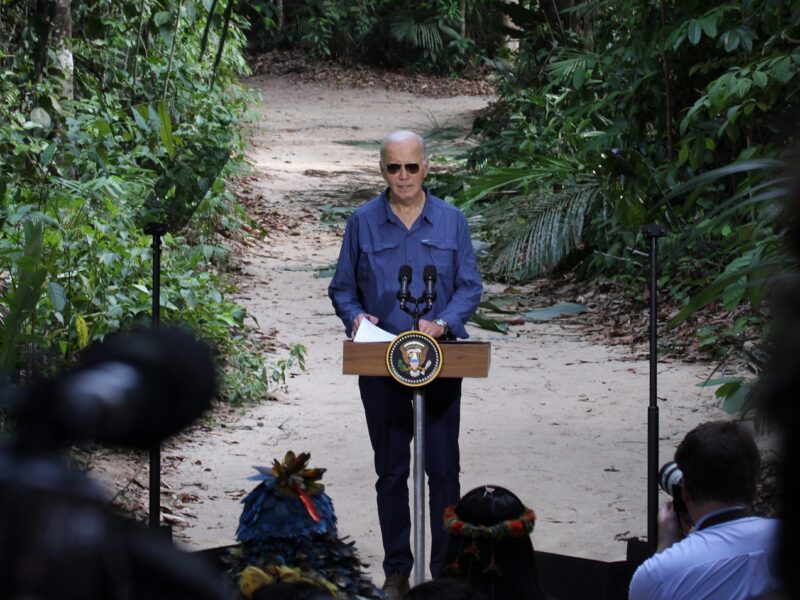
Fears of Trump presidency loom over Biden’s visit to the Amazon
The Democrat and current U.S. president landed in Manaus, mentioning millions of dollars in investments for the Amazon Fund and a new public-private partnership. However, experts interviewed by InfoAmazonia claim that Biden has fallen short of his promises and that Trump is expected to further reduce U.S. support for the Amazon.

In the footsteps of turtle and egg smugglers in Bolivia’s Amazon Forest
By Eduardo Franco Berton When the veil of darkness falls on the forest, men armed with .22 caliber Marlin rifles come with it, and they are determined to pursue their prey. Once a bullet hits its target, the injured animal falls into the water and has to swim to the shore, where it bleeds to […]

Colombian and Ecuadorian criminal groups expand their violent influence throughout the Amazon
By Plan V* The Comandos de la Frontera, a Colombian armed group that also operates in northern Ecuador, and the Ecuadorian gang Los Choneros have imposed a regime of terror in the Amazonian provinces of Sucumbíos and Orellana, although the alliances between them are unclear. One of the illegal activities that has grown the most […]

Energy transition creates a race for strategic minerals with 5,000 applications in the Amazon
Copper, lithium and nickel, among others, are raw materials used to produce electric vehicles, batteries, wind turbines, and solar panels. The Amazon holds part of these minerals, and large companies want to exploit it. Most mining applications are in Pará state, and some of them will have direct impact on areas located in Indigenous Lands and Conservation Units.
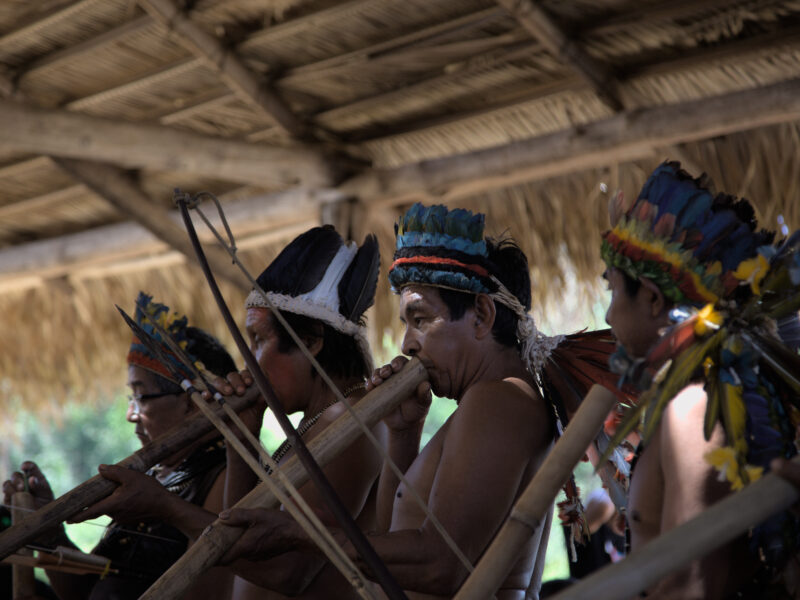
Dam project threatens indigenous rituals, hunting areas and even gravesites in the Tenharim Marmelos Indigenous Land
InfoAmazonia and Brasil de Fato visited the territory to understand the views of the indigenous people about the construction of the Tabajara Dam – a project for a 37-square mile (97-sq. km) reservoir in Machadinho d’Oeste, in Brazil’s Rondônia state, which is expected to impact 9 indigenous lands, including Tenharim Marmelos.
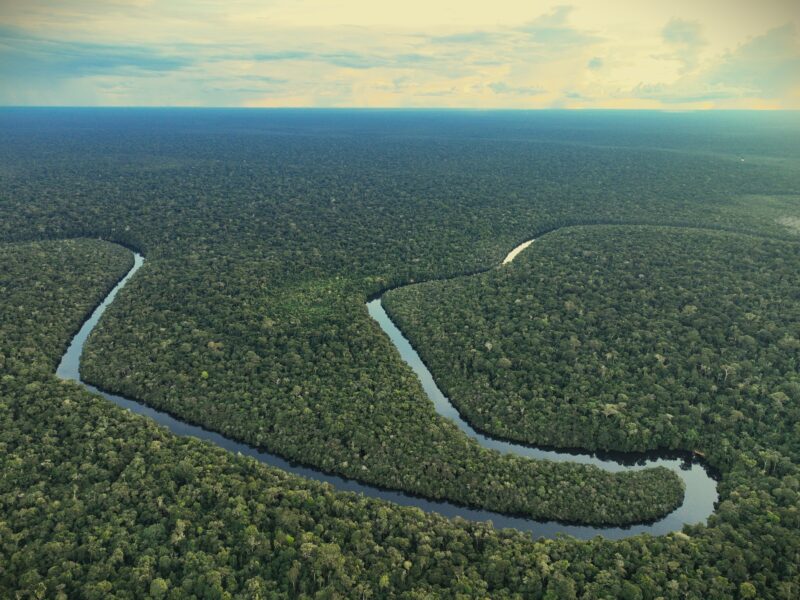
Nine indigenous territories, including areas of uncontacted people, are impacted by a dam project in Brazil’s Rondônia state
The Tabajara Hydroelectric Power Plant (HPP) project will create a 60-square-mile reservoir in Machadinho d’Oeste. In addition to nine indigenous territories, an exclusive joint analysis by InfoAmazonia and Brasil de Fato confirms the influence of the project on seven areas where evidence of uncontacted indigenous groups has been found.