

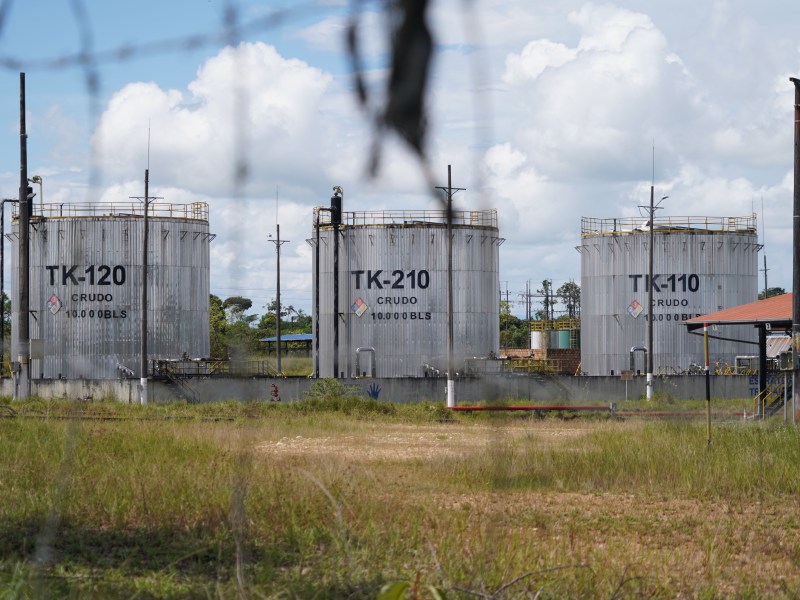
Almost the entire Ombú oil block, operated by Emerald Energy, overlaps Colombia’s Macarena Special Management Area, created to conserve connectivity between the Andean, Amazon and Orinoquía natural regions. The project, now suspended after social protests, exposes the tensions caused by hydrocarbon extraction in protected areas without clear regulations.
Category: Colombia

The Critical Minerals Trade: The Illegal Route Connecting the Amazon with China
A complex network of actors has emerged around the critical minerals of the Amazon. Some operate along contested river corridors, trading with guerrilla groups and corrupt security forces. Others, under a façade of legality, move massive quantities of material through large port cities connected to international trade routes. Together, these operations endanger the environment and the sovereignty of entire nations.
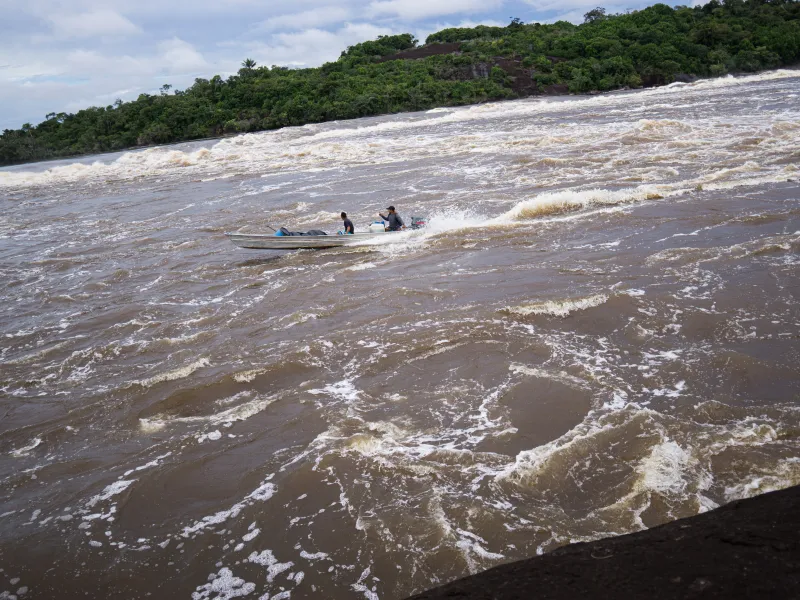
Chorrobocón’s Gamble: Betting on Critical Minerals
In Colombia’s jungles, where the deep green of the Amazon collides with poverty and exclusion, a hidden and dangerous business flourishes. In the remote corners of Guainía, Indigenous communities such as the Puinave find themselves trapped in illegal mining, an activity that allows them to survive but threatens to destroy the land they inhabit. With the decline of gold, strategic minerals have risen as a promise for the future. However, this new mineral rush, which promises to be less polluting than gold mining, carries enormous environmental and social risks.

The Price of Progress: The Dark Side of Critical Minerals in the Amazon
Based on extensive fieldwork and an investigation of supply chains, tracing minerals from extraction to international buyers, we reveal how the global race for the inputs of the energy transition is intensifying violent disputes along the Colombia–Venezuela border, where armed groups control the territory, commit systematic abuses, and destroy one of the planet’s most important carbon sinks.

Colombia declares itself the first nation in the Amazon with its entire forest free from oil and mining activities
Colombia’s minister of environment and sustainable development, Irene Vélez Torres, made the announcement Thursday (Nov. 13) at a meeting of Amazon Cooperation Treaty Organization (ACTO) ministers during COP30.

Indigenous communities in the Colombian Amazon decry oil pollution and threats posed by guerrillas
President Gustavo Petro pledged to halt oil and gas exploration in the Amazon. However, Colombia faces a complex challenge, with the oil industry, armed groups, and Indigenous communities vying for control of the same territories.

The Amazon rainforest emerges as the new global oil frontier
Half a century of oil exploration has left the world’s largest rainforest scarred by deforestation, water contamination and air pollution. Indigenous lands have been infringed and economic disparities exacerbated. Now a new wave of drilling threatens to perpetuate this destructive legacy.

How did we investigate oil data in the Amazon?
Por Renata Hirota April 1, 2025 This story is part of the special series EVERY LAST DROP Since July 2024, the cross-border project Every Last Drop has investigated and mapped available data on oil and gas exploration across the Amazon, focusing on the biome’s reach into Brazil, Colombia, Ecuador, Guyana, and Peru. The analysis used […]

Colombian and Ecuadorian criminal groups expand their violent influence throughout the Amazon
By Plan V* The Comandos de la Frontera, a Colombian armed group that also operates in northern Ecuador, and the Ecuadorian gang Los Choneros have imposed a regime of terror in the Amazonian provinces of Sucumbíos and Orellana, although the alliances between them are unclear. One of the illegal activities that has grown the most […]

Colombian companies defy laws, push Amazon carbon projects in Indigenous lands
Without proper consultation, leaders were persuaded to accept a carbon project on indigenous lands in the Amazon, with the promise that the money would fund a university in the villages; Funai (National Indian Foundation) was unaware of pre-contracts and states that negotiations may be annulled.