


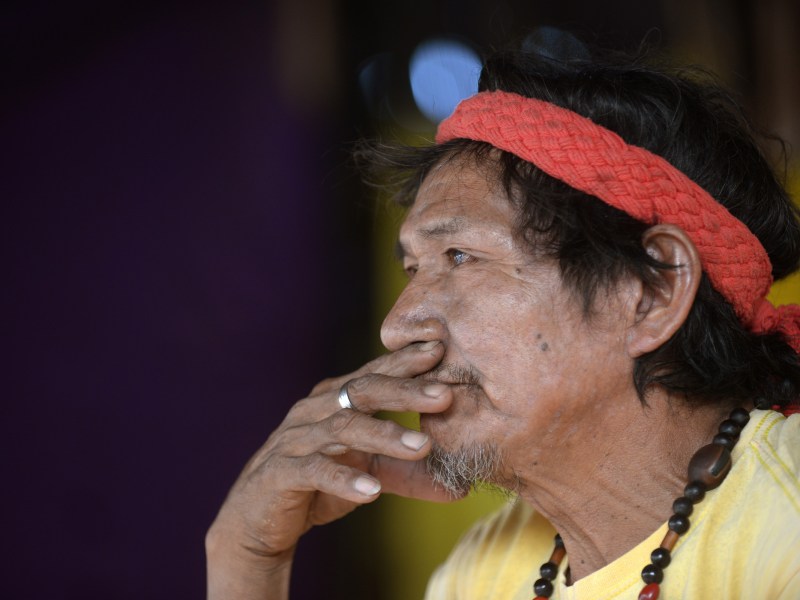
Over 75% of the Krenyê territory, in the Brazilian Maranhão state, overlaps a block granted for fossil exploration where drilling could begin in 2026. Allegedly to help the energy transition, expansion of production at the Parnaíba Thermoelectric Complex bets on energy generation and the transformation of the MATOPIBA area into a logistics corridor for gas and grains, impacting quilombola territories and protected areas.

Posted innews / COP30
Without global consensus, Brazil seeks a roadmap with scientists and oil companies to keep the fossil fuel phase-out proposal alive
Amid diplomatic progress and domestic contradictions, Brazil tries to turn its proposal to gradually eliminate oil, gas, and coal into a global roadmap. Studies backing the roadmap presented in Belém are set to involve international agencies, scientists, and representatives from the oil sector, while the country keeps exploration of new reserves in the Amazon open.
Posted innews / COP30
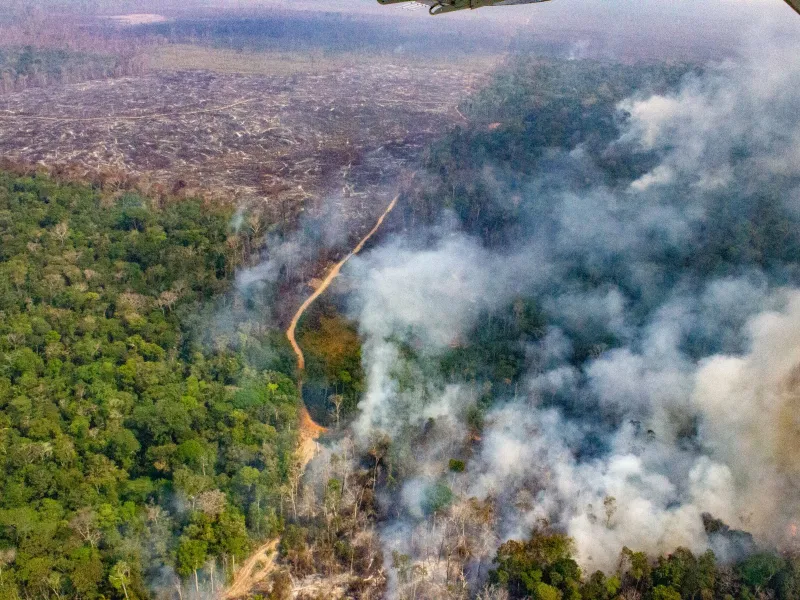
At COP30, Researchers Call for Expansion of Brazil’s Zero Deforestation Target by 2030
Given the climate emergency, the federal government’s plan should include forest degradation, align targets with states, and improve rural credit, say researchers in Belém.
Posted innews / COP30
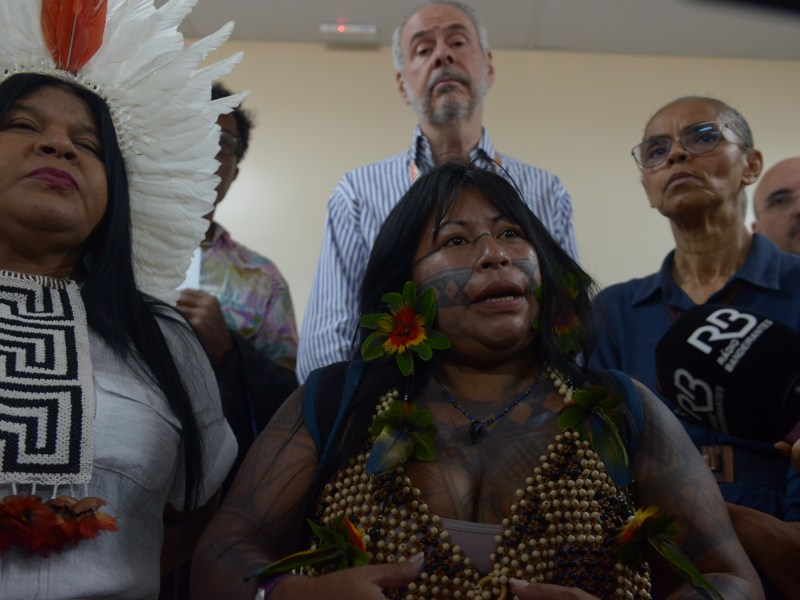
Brazilian government announces demarcation of two Indigenous territories following Munduruku protest at COP30
Munduruku Indigenous People demanded the demarcation of their territories and the revocation of infrastructure projects affecting their lands; the movement held a peaceful demonstration in front of the Blue Zone, a space where climate negotiations take place.

Posted innews / Oil
Colombia declares itself the first nation in the Amazon with its entire forest free from oil and mining activities
Colombia’s minister of environment and sustainable development, Irene Vélez Torres, made the announcement Thursday (Nov. 13) at a meeting of Amazon Cooperation Treaty Organization (ACTO) ministers during COP30.

Posted inlong form / COP30
As a sponsor of COP30, Vale buys carbon credits from an area in the Amazon accused of irregularities in timber management
A mining company presents the ABC Norte REDD project as its environmental trump card, but the Brazilian Institute of Environment and Renewable Natural Resources found problems with timber extraction within the climate compensation area — which formed the basis of a complaint filed by the Public Prosecutor’s Office against the timber company Madeireira J & Y. The territory in the Amazon region of Pará also registers deforestation, authorization for mineral exploration, and land conflicts with traditional communities.

Posted innews / Oil
IBAMA license for block 59 paves the way for a new oil rush in the Amazon
The well will be drilled on the Brazilian equatorial margin, home to the world’s largest continuous strip of mangroves and the Great Amazon Reef System. Another 19 blocks were auctioned in the region in July of this year.

Posted inlong form / Mining
Energy transition creates a race for strategic minerals with 5,000 applications in the Amazon
Copper, lithium and nickel, among others, are raw materials used to produce electric vehicles, batteries, wind turbines, and solar panels. The Amazon holds part of these minerals, and large companies want to exploit it. Most mining applications are in Pará state, and some of them will have direct impact on areas located in Indigenous Lands and Conservation Units.
Posted inlong form / Climate Change
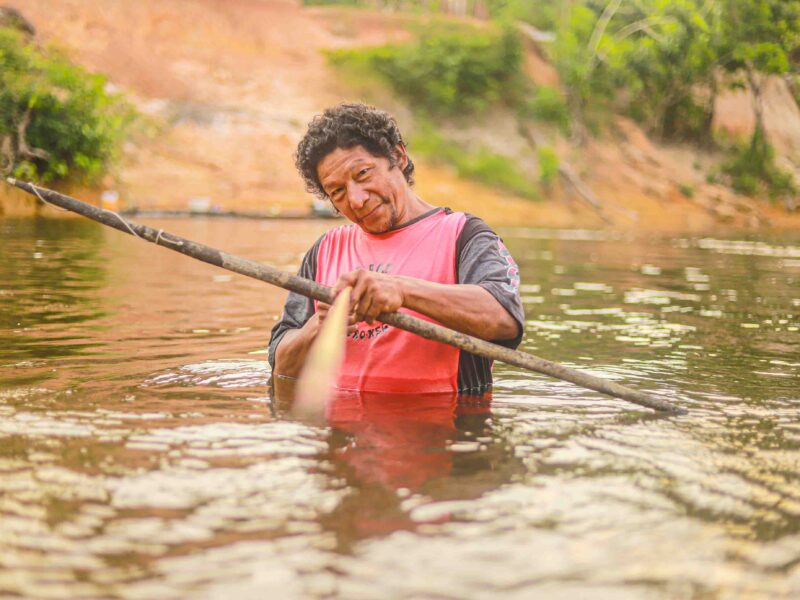
Company sells Indigenous land in Amazonas as NFTs without community’s knowledge
Areas of the Baixo Seruini Indigenous Land, inhabited by the Apurinã people in the southern Amazonas, were sold by the company Nemus in a project that promises to preserve the forest and generate carbon credits. The Prosecutor’s Office recommended the suspension of the project in December 2022; however, InfoAmazonia identified that negotiations are still ongoing on the internet.
Posted inlong form / Climate Change
Shell affiliate accused of violating Indigenous rights in carbon credit contracts
Indigenous people claim that Carbonext allegedly pressured communities to sign documents with blank sheets. The company denies the accusations and, shortly after allegations of rights violations and non-compliance with international conventions in suspicious contracts on indigenous lands in the Amazon, withdrew from the business.