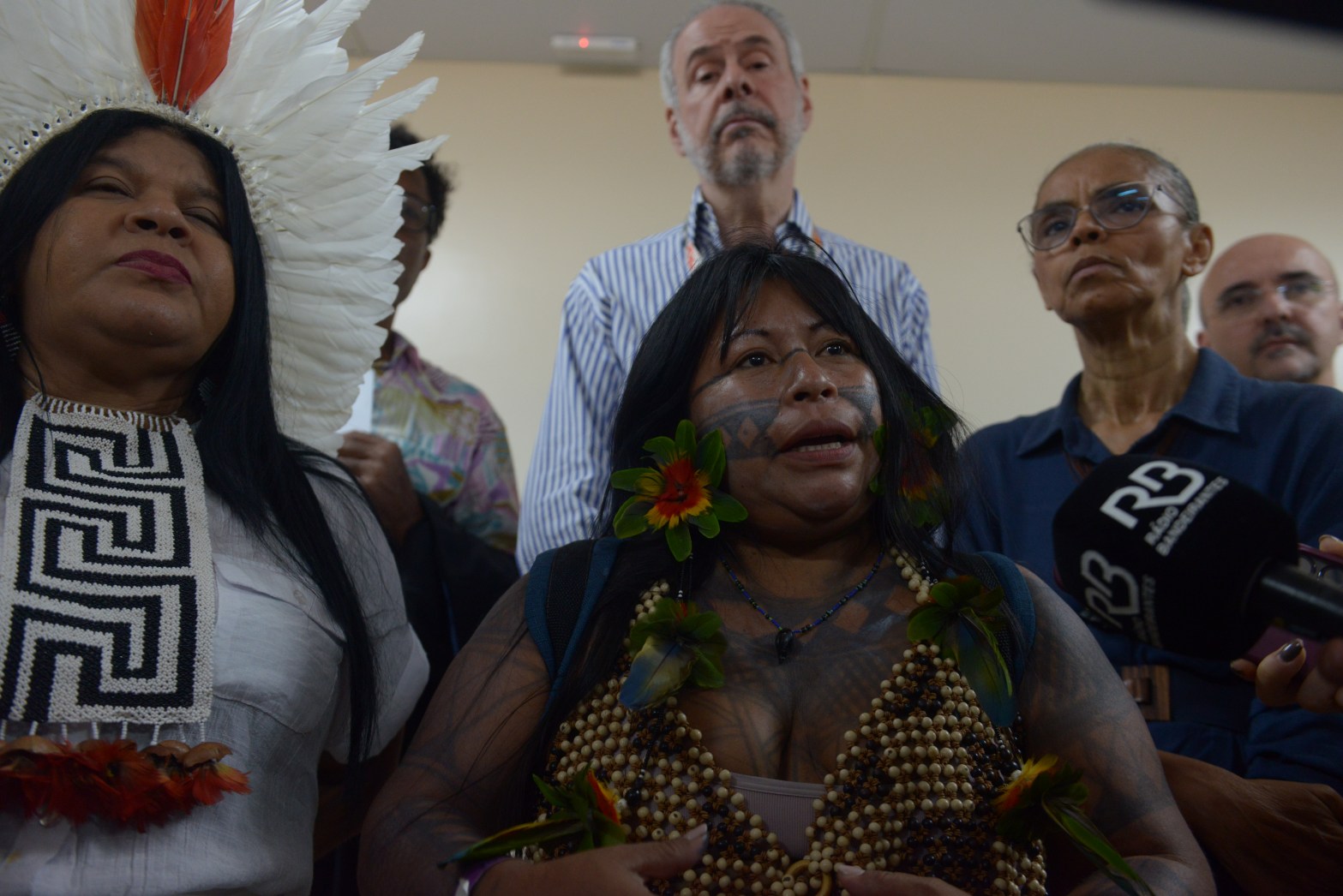


Held in the Amazon for the first time, the 30th United Nations Climate Change Conference (COP30) brought together, in the same territory, the negotiation tables of the Blue Zone and the continuous pressure from Indigenous peoples, traditional communities, civil society organizations and social movements from the Global South. The conference’s legacy to environmental defenders is not only what was signed in Belém, but also how global decisions, national policies and territorial struggles intersected before, during and after the meeting.
On one hand, the official documents of the United Nations Framework Convention on Climate Change (UNFCCC) recognized, for the first time, Afro-descendant populations, Indigenous territorial rights, and prior consultation as part of climate policy. On the other hand, the same documents avoided addressing projects that now pose the greatest threat to these peoples: fossil fuels, mining, and large infrastructure construction works. At the same time, the Brazilian government used COP30 to announce demarcation of Indigenous lands andunblock internal procedures, responding to accumulated pressure from Indigenous organizations that had been organizing long before the delegations arrived in Belém.
So, after COP30, what changes in climate policy and the daily lives of those who defend territories, forests, and rights in the Amazon and the Global South?
Fossil fuels
COP30 ended without mentioning fossil fuels in any of the 29 official documents. According to observers, that underscores both the conference’s political limitations and the urgency of the debate, which now shifts to the post-Belém period. Even after successive interventions by Brazil’s Minister of the Environment and Climate Change Marina Silva and President Lula (PT), the roadmap for the end of fossil fuels was not included in the agenda of negotiations.
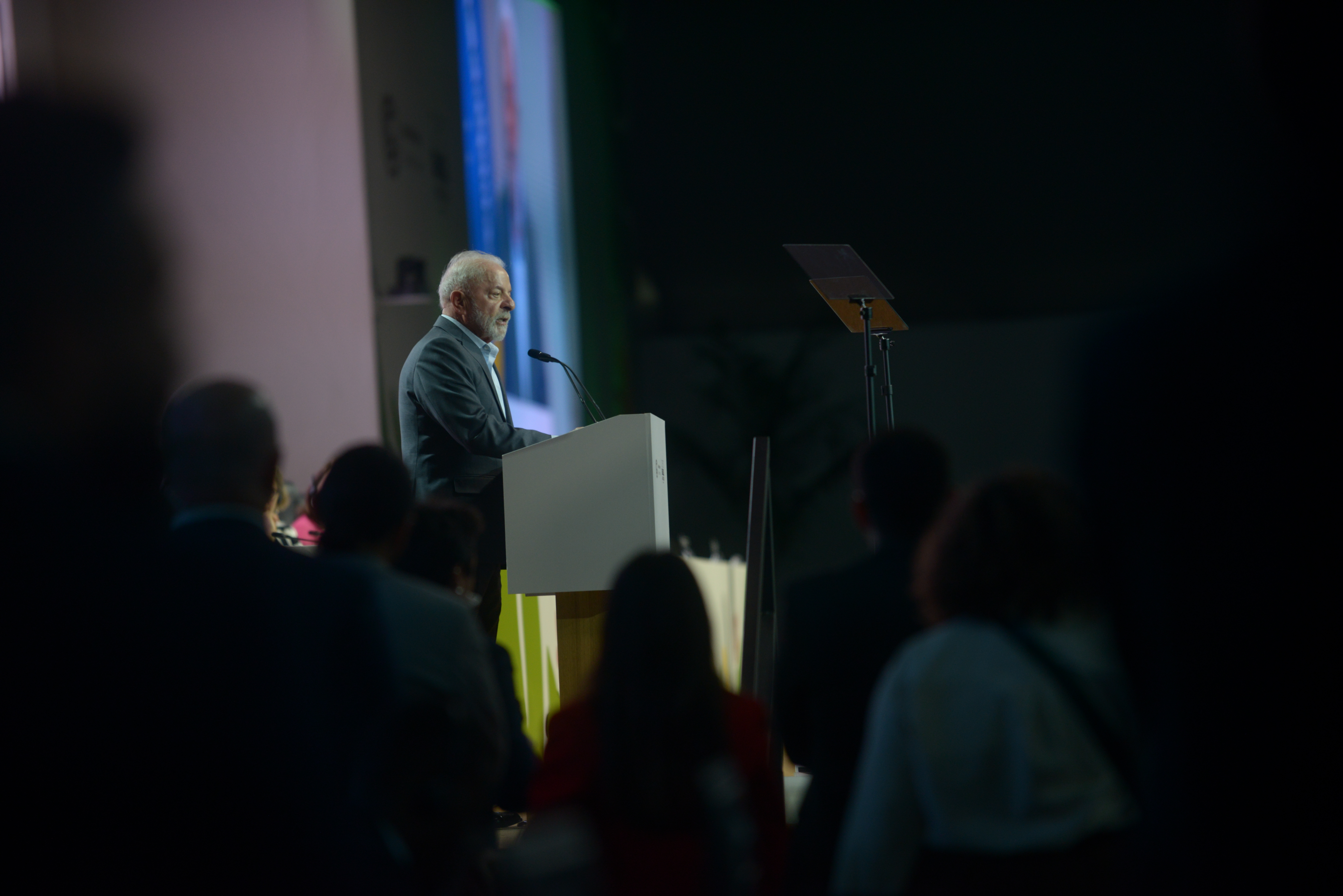
That gap did not go unnoticed. During the event, Colombia announced that it will host, in April 2026, the first international meeting dedicated exclusively to the transition away from fossil fuels, while declaring its entire Amazon as an oil and mining-free zone. The initiative concerted outside formal channels was presented as a direct response to the COP’s omission.
At its closing, COP30 President André Corrêa do Lago proposed to develop – also outside the official agenda – two “roadmaps”: one to phase out deforestation and another one to guide the energy transition. The measure shows that core issues were relegated to the post-COP period and that part of the climate outcome will depend on processes parallel to the UNFCCC itself.


Furthermore, Brazil arrived in Belém without presenting the Climate Plan – a document that should detail the path towards reducing emissions by 59%-67% by 2035 – and it left without it as well. The delivery was prevented by a deadlock with Brazil’s Ministry of Agriculture and Livestock (MAPA): the Ministry of the Environment (MMA) still hoped to finalize the draft approved by the 23-ministry Interministerial Committee on Climate Change (CIM), but the agribusiness sector, which gathers organizations and Congress members, opposed the methodology used.
In different calculations within the plan, the agribusiness sector’s share of Brazilian emissions varied from 68% to 31%, and no consensus was reached within the government. For Indigenous and socio-environmental organizations, the disagreement underscores a crucial point: if deforestation is the country’s largest source of emissions, combating it should be at the center of the climate plan – and this necessarily involves demarcation of Indigenous lands and direct funding for communities that protect the forest.
Thus, the lack of a plan projected a post-COP period fraught with uncertainties: without clear guidelines, the 2026 climate budget, mitigation and adaptation actions, and the role of Indigenous peoples and traditional communities in implementing policies remain unclear.

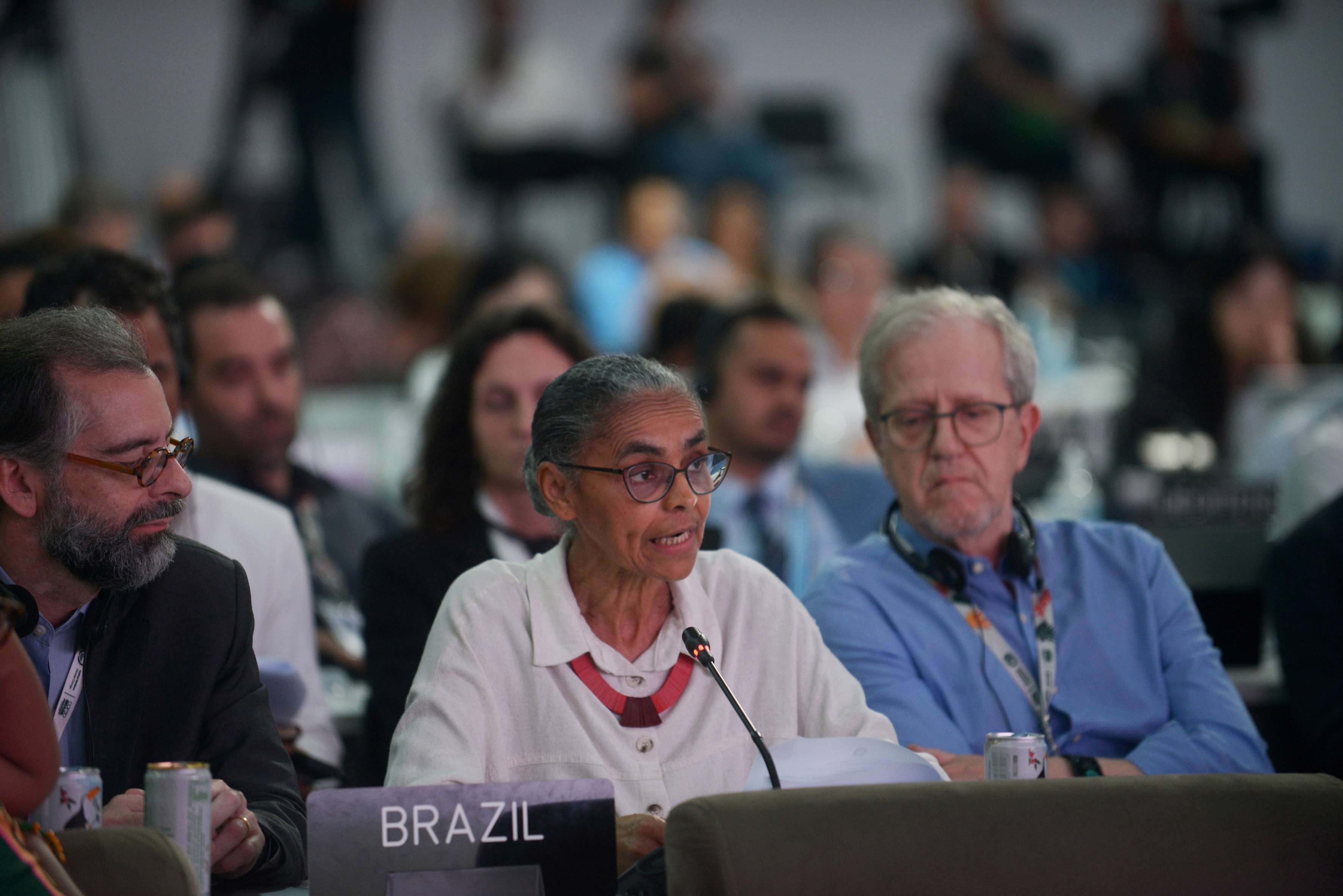
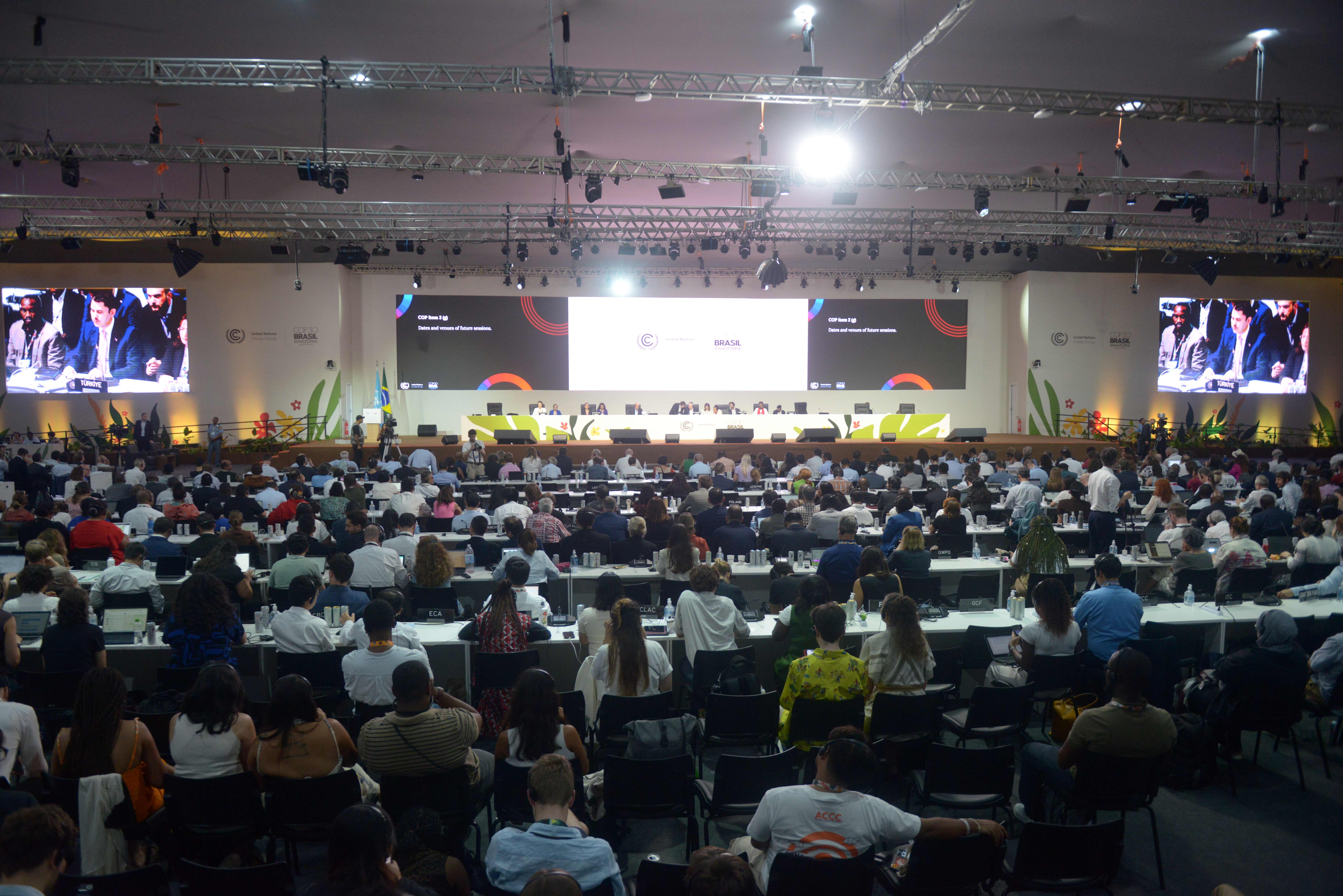

In an interview with Repórter Brasil, Nigerian activist Kentebe Ebiaridor stressed that the priority should be guaranteeing global food security rather than supplying the industry. “We should be able to join forces and try to feed the world, instead of feeding machines,” said Ebiaridor, who coordinates Oilwatch International, an organization dedicated to denouncing the impacts of the oil industry on communities in the Global South.
For him, “defossilizing the economy is imperative” and reducing consumption of oil, gas, and coal is not enough: “We need rapid elimination.” The activist was in Belém to pay a tribute to Ken Saro-Wiwa, a Nigerian writer and activist who led peaceful resistance against the actions of Shell and other multinational oil companies on the lands of the Ogoni people in Nigeria.
Nigeria is Africa’s top oil producer and one of the largest on the planet. Saro-Wiwa was executed by the Nigerian government in 1995, a few months after being awarded the Goldman Prize, known as the “Oscar” of environmentalism.
For environmental advocates, especially in the Amazon and Latin America, the lack of debate on fossil fuels in the final COP documents increases risks that are already known. Brazil and Colombia remain among the most dangerous countries in the world for those who protect territories – and, as human rights organizations showed during the conference, oil and mining expansion is directly associated with increased threats. Thus, the legacy of COP30 depends on what comes next: whether the announced political commitments will take practical form or remain only as declarations outside official documents.
Before COP30, Brazil’s Indigenous affairs agency FUNAI had already announced that Indigenous Lands account for less than 3% of national deforestation and work as “natural barriers” against environmental destruction. At the same time, data on annual deforestation rates from the Project for Satellite Monitoring of Deforestation in the Legal Amazon (PRODES) of Brazil’s National Institute for Space Research (INPE) showed an 11% drop in the Amazon. The result created a conflicting scenario: significant decrease in deforestation but uncertainty about how the country intends to consolidate or expand that trend.
In an interview with InfoAmazonia, Brazilian humanitarian activist Thiago Ávila – the international coordinator of the Gaza Freedom Flotilla Coalition – points out that COP30 reproduces structural tensions and contradictions present in other spaces of negotiation and power.
“On one side, we see closed doors, the interests of a system where there is a lot of money from oil and gas, from mega-mining, even from destructive agribusiness, which is very strong here. On the other side – the outside – we see people mobilizing in cities, rural areas and forests, everywhere in the world, saying that the genocide we see in Palestine, in Congo, in Sudan, and the ecocide we see in the Amazon, in the Caatinga, in the Atlantic Forest, in all the biomes of this world, are connected by this very system that exploits, oppresses and destroys nature.”
On one side, we see closed doors, the interests of a system where there is a lot of money from oil and gas, from mega-mining, even from destructive agribusiness, which is very strong here. On the other side – the outside – we see people mobilizing in cities, rural areas and forests, everywhere in the world.
Thiago Ávila, international coordinator of the Gaza Freedom Flotilla Coalition.
Land demarcation: accumulated pressure and announcements at COP
Before the delegations arrived in Belém, Indigenous leaders were already pushing for the completion of demarcation procedures of 107 Indigenous Land. In October, Kleber Karipuna, executive director of the Coordination of Indigenous Peoples of Brazil (APIB), summarized the demand: demarcation of Indigenous lands is one of the most effective actions against the climate crisis. “Science proves what we already know: demarcated land means standing and living forests. Our Indigenous territories in the Amazon alone generate 80% of the rainfall that irrigates agribusiness in Brazil,” he declared.
On Monday, November 17, the Brazilian government announced declaratory decrees for 10 new Indigenous Lands signed by Justice Minister Ricardo Lewandowski in a joint action with the Ministry of Indigenous Peoples. In addition to the 10 Indigenous Lands declared, four others were officially confirmed and six had their boundaries set, also during COP.
The measure gave international visibility to the Indigenous agenda, but it falls within the field of national politics rather than being a direct result of negotiation by UN parties. The decisions respond to prolonged mobilization, denunciations of territorial violence, and pre-COP accumulated pressure that used the conference as a showcase and political opportunity.


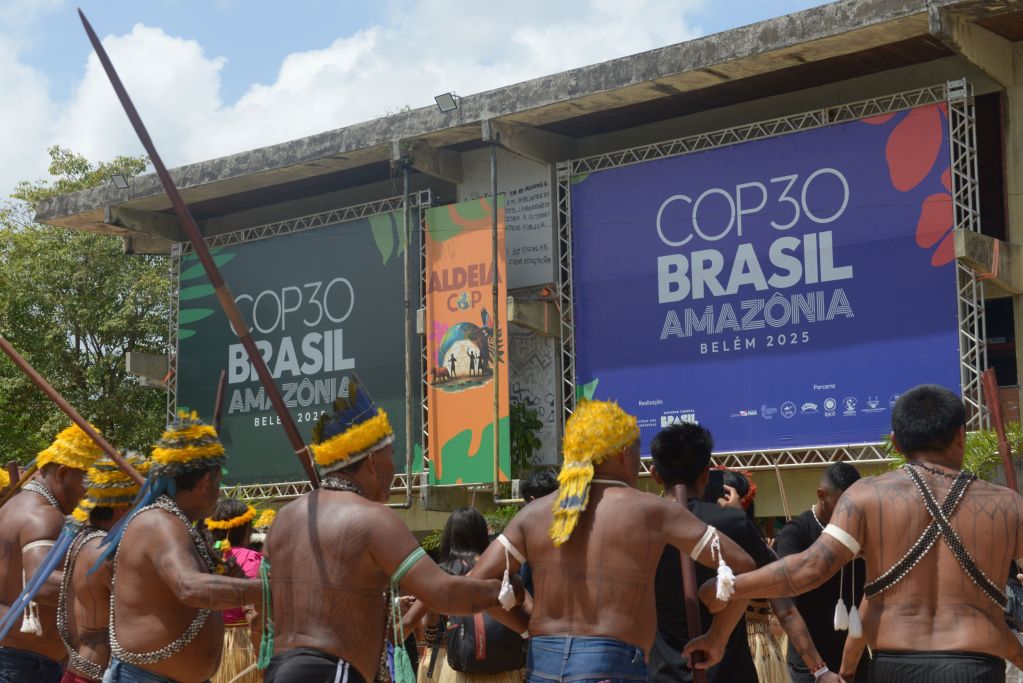

Right after demarcations were announced in Belém, political dispute escalated in Brazil. In Mato Grosso state, for example, Governor Mauro Mendes (União Party) said he would try to challenge three declared Indigenous Lands in court. In addition, the agribusiness sector launched a national offensive against the measures. The Brazilian Confederation of Agriculture and Livestock (CNA) filed a lawsuit at the Federal Supreme Court (STF) requesting the suspension of the new ordinances and decrees for alleged “disloyalty” on the part of the Government and arguing that no demarcation should proceed before there is a definition on the Time Frame Act – eventually approved this week by the Senate, although its content has already been overturned by the Supreme Court. The Agricultural Caucus in Congress also filed a criminal report with the Attorney General’s Office against President Lula and Minister Lewandowski, accusing them of breach of public duty for having signed the demarcations without reference to the Time Frame Act.
The offensive comes amid rising violence in rural areas: days earlier, a Guarani Kaiowá man was murdered during an attack by gunmen during a land reclamation action by Indigenous people in Mato Grosso do Sul state. Therefore, the beginning of the post-COP30 period is marked not only by promises of protection but also by a political environment that may define the pace – and integrity – of the implementation of decisions announced in Belém.
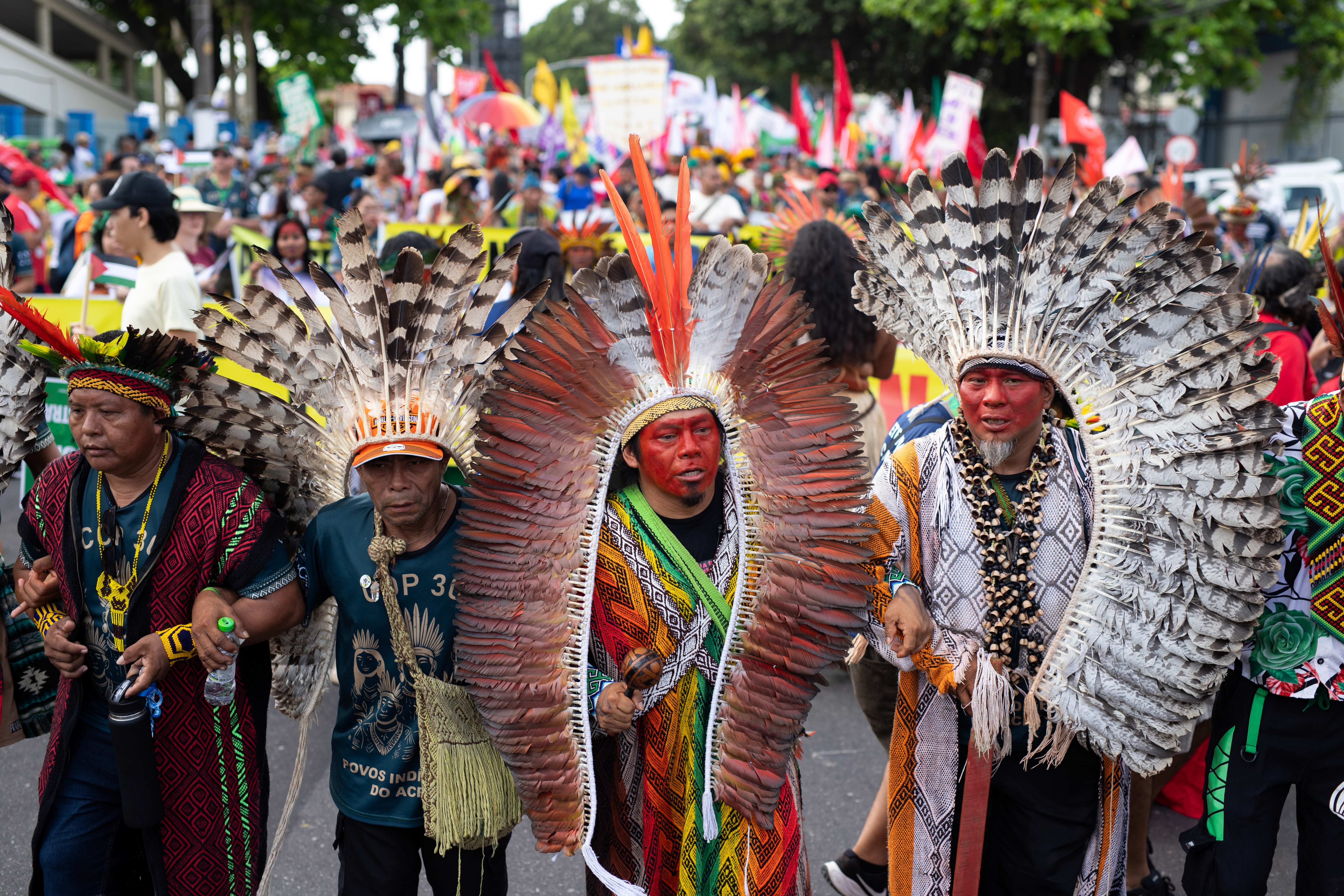
The perception that COP30 opened up space but not necessarily provided guarantees also appears in the accounts of other Indigenous leaders who followed the process in Belém. For Keice Borari from the Borari territory in Alter do Chão, Pará, the post-COP period will be crucial to assess whether the expanded participation of native peoples will translate into real protection.
“COP 30 is a limited, restricted space, but it is also where decisions are made only by top world leaders. We Indigenous Peoples are here so that they can definitively understand that we, as guardians of the territory, of the land, of Mother Earth, can’t be forgotten, that we can’t be ignored. There is no climate justice without demarcation of Indigenous territories. Decisions cannot be made without listening to those who have always been here, who were the first ones, and we are here because of them too. We continue as guardians and we will not allow our territories to be invaded, to be divided, to be up for negotiation.”
There is no climate justice without demarcation of Indigenous territories. Decisions cannot be made without listening to those who have always been here, who were the first ones, and we are here because of them too. We continue as guardians and we will not allow our territories to be invaded, to be divided, to be up for negotiation
Keice Borari, of the territory Borari, in Alter do Chão (PA)
At the Global Climate March on Sunday, November 15, which brought thousands to the streets of Belém, the demand for land titling also appeared through the voice of the quilombola people. Josenilson Brito de Carvalho, from the Lago do Sapateiro Quilombo in Guimarães, Maranhão, said that he was marching to defend “the immediate titling of our quilombos!”. And he provoked: “[The Brazilian government] has money for so many other things; why doesn’t it have money to demarcate our lands? Especially since we the quilombola people defend, work on, and know the environment?”
When asked what he would say if he were in a meeting with a global head of state, Carvalho summarized: “Listen to us!”



Just energy transition
For the first time, Afro-descendant populations were recognized in documents approved by a COP – both in the Just Energy Transition Program – which also recognized the right to prior, free and informed consultation for Indigenous peoples – and in the Mutirão decision, in the indicators of the Global Goal on Adaptation and in the Belém Gender Action Plan.
At the same time, the final document on just transition did not mention the impacts of mining on the low-carbon economy – a major concern of Indigenous and Afro-descendant peoples whose territories concentrate strategic minerals.
Ciro Brito, a climate policy analyst at the Socio-Environmental Institute (ISA), stresses the unprecedented nature of the document. He confirms that prior, free, and informed consultation clearly mentions Indigenous peoples in the just energy transition program.
“This is a demand from the Indigenous caucus [a political action group that gathers Indigenous leaders, delegations, and organizations to establish common stances within UN climate negotiations] and the People’s Summit. Free, prior, and informed consultation is a major victory and yes, it’s the first time it appears in a final decision document of the Framework Convention on Climate Change.”
Brito recalls that consultation had already been confirmed in national and international legal jurisdictions and in other UN bodies, but not within COPs. “It’s a major victory because it recognizes the autonomy of Indigenous peoples, the sovereignty of Indigenous peoples, which is one of the great demands of APIB’s Indigenous NDC, for example: autonomy and direct funding,” he says.
It’s a major victory because it recognizes the autonomy of Indigenous peoples, the sovereignty of Indigenous peoples, which is one of the great demands of APIB’s Indigenous NDC, for example: autonomy and direct funding
Ciro Brito, climate policy analyst at ISA.
He also points out the contradiction of discussing energy transition without addressing the geography of mining: “How can we think about a transition in which the supposed renewable energies will use critical minerals that are located mostly on the territories of traditional communities, such as Indigenous peoples, without establishing this connection with free and prior informed consultation?”
Nevertheless, Brito explains that the inclusion of recognition in the document on energy transition is very important. “The energy transition depends on critical minerals, and a large part of them is in Indigenous and traditional territories. The inclusion of consultation will force these processes to consider the autonomy and rights of these peoples,” he explains.
Juliana Tinoco is the coordinator of Socio-Environmental Funds of the Global South and responsible for organizing the Global South House at COP30 – an alternative space for the Global South to discuss climate solutions from the perspective of those who are hit hardest. She says that, even with the formal recognition of Indigenous, quilombola, and Afro-descendant peoples in official documents, how – or if – this will translate into actual resources is still unclear.
“If financing continues to be centralized in large international funds and conditioned by market metrics, those living in the territories will remain outside the financial architecture. Environmental defenders need specific funding models designed to guarantee security and autonomy,” Tinoco says.
For her, one of the most visible effects of COP30 was the increased capacity for coordinated action among actors from the Global South, such as Latin America, Africa, and Southeast Asia: “The conference opened space for conversations and alliances that don’t fit in the Blue Zone. The expanded presence of Indigenous peoples, quilombola communities, and grassroots organizations influenced debates and highlighted the need for mechanisms specific to the Global South.”
Gender and race
In the Gender Action Plan, the term “Afro-descendant” only appeared after popular and political pressure. The first draft, presented on November 18, only mentioned “women,” without specifying race, class, and territory.
When the draft was published, a note by Geledés Black Women’s Institute asked: “The unavoidable question is: why do the European Union, the United Kingdom, and Australia – which are so vocal when it comes to human rights and climate justice – refuse precisely to recognize those who suffer the most from environmental racism, gender inequality, and the direct impacts of the climate crisis?”
In an interview with InfoAmazonia, Joanita Babirye, co-founder of Girls for Climate Action, a young feminist movement in Uganda, stressed the importance of women in the climate struggle: “Feminist resistance is a global force that connects the Amazon to Africa and Uganda.” For her, “as girls, young women, and women, we are the ones who go after food. We are victims of climate impacts, but we are also leading change in our communities because we are bearers of knowledge; we have the Indigenous knowledge necessary to drive climate ambition, adaptation, and the construction of our own resilience.”
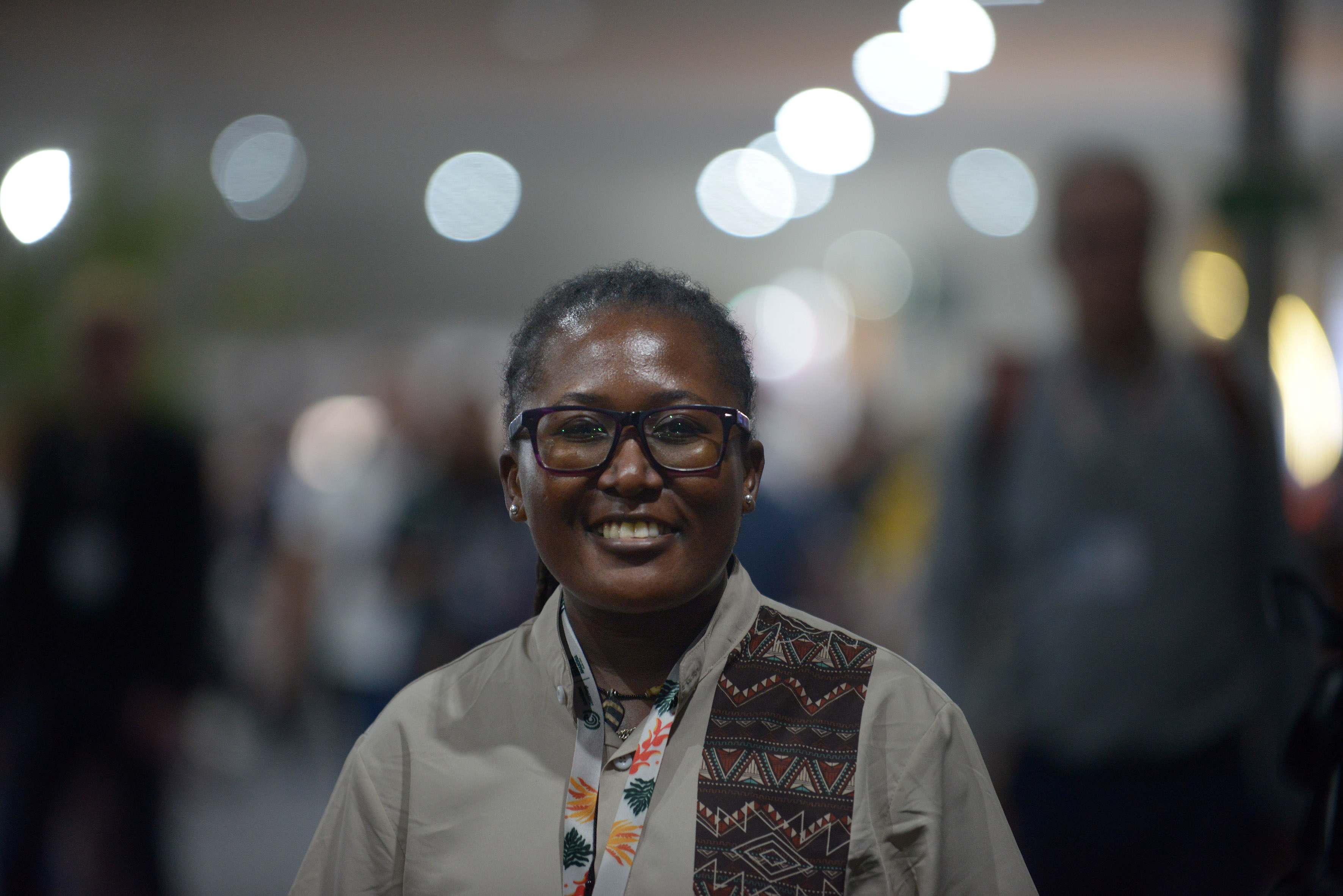
With the inclusion of the term in the final text on November 22, the Institute classified the change as a historic achievement: “For Geledés, incorporating Afro-descendants into the climate decision-making architecture corrects decades of silencing and aligns international policy with the realities of populations that are affected the most but continue to produce essential knowledges, practices and solutions for territorial resilience.”
For Thuane “Thux” Nascimento, director of PerifaConnection and a member of COP das Baixadas and the People’s Summit, one of the main advances of COP30 was that the black movement got to include the term “Afro-descendants” into four official documents for the first time. “That was a landmark, it was one of our great expectations for COP30,” she says, stressing that it was built throughout several international events. She also points out progress in the Escazú Agreement, a Latin American treaty on access to information and protection of environmental defenders, although she considers it not to be ideal. “I think this is extremely important in order to defend the defenders,” she says.
Nascimento recalls that during the week of COP30, two babassu breakers were murdered in Maranhão – “older women who were murdered while breaking babassu, who were also related to land protection.” For her, “this issue needs to advance, as does gender violence against defenders” – a reality that affects defenders throughout the Amazon region and in other countries of the Global South.
Beyond its symbolic nature, Black organizations point out that the recognition opens space for more concrete political disputes in the coming years. This includes the possibility of claiming direct participation in adaptation programs, greater access to climate resources, and formal consultation mechanisms – areas where Afro-descendant populations have been historically marginalized, despite suffering major impacts from extreme events, environmental racism, and loss of territory.
At the same time, experts remind us that the mention in the document does not, in itself, guarantee immediate changes: without operational guidelines and dedicated resources, the progress achieved may being limited to the normative level. Turning this recognition into applicable and funded instruments will be the post-COP challenge.
Climate finance
COP30 decided to triple adaptation finance by 2035, but the measure came with reservations that are a matter of concern to experts. According to Cláudio Angelo from the Climate Observatory, the increase was linked to the Collective Quantified Goal for climate finance negotiated at COP29 in Baku, which means that these funds will come from multiple sources — including private capital and loans from multilateral banks — and not just from public donations as advocated by developing countries.
“This is not good because when you establish this condition, you are saying that this money is a loan; it won’t be a donation as it should be in order to finance adaptation,” Angelo explains. In practice, he is saying that this means that poor countries will have to take out loans and increase their debts to deal with climate impacts they did not cause – “which is ridiculous,” he criticizes.Regarding the broader goal of mobilizing US$1.3 trillion per year for climate finance by 2035, Angelo explains that the conference just “took note” of a report that had been commissioned at COP29. The document, prepared throughout the year by the COP Presidencies of Brazil and Azerbaijan, provides a roadmap for how countries could reach this amount and where the funds would come from. “That’s all that happened: a report,” the expert summarizes. According to him, there was no real progress in terms of financial commitments by countries.

According to Angelo, another important point was the creation of a work program to discuss Article 9.1 of the Paris Agreement, which establishes that developed countries “must provide” climate finance resources to assist developing countries. He explains that this expression has a specific meaning in diplomatic language: public money or highly concessional loans, with very low interest rates.
The final decision, included in Belém’s Mutirão document, includes discussion of 9.1 “in the context of Article 9 as a whole” – a concession to rich countries, Angelo explains, who want to broaden the donor base to include nations that were considered developing countries in 1990 but have since become wealthy, such as China and Saudi Arabia. “It’s as if they were saying: ‘I’m not paying what I owe and besides, there are people out there who must pay it too’,” he sums up.
For Stela Herschmann, a climate policy specialist at the Climate Observatory, the participation of Indigenous peoples, quilombola communities, and other traditional groups is crucial to ensure that the future financing roadmap does not become just a report with no practical application. “To avoid this, the parties, civil society, and stakeholders must take ownership over the process,” she argues.
Financing came out of COP30 without definitions guaranteeing predictability or direct access for Indigenous peoples, quilombola communities, and traditional groups, who are among the groups with the highest demand for these resources.
In practice, the immediate legacy for environmental defenders is an open scenario: there are no specific mechanisms to ensure that the money reaches those who work in the territory; the New Collective Quantified Goal (NCQG) set at COP29 allows loans to replace public funds, which may increase inequality; and the financing work program to be established over the next two years becomes the main field of political dispute.
Defenders and traditional communities will have to closely monitor how Brazil and other countries negotiate the rules for accessing funds and how the safeguard and participation criteria will be incorporated. In addition, it is important to observe whether there will be room for financing models specific to the Global South, as advocated by community fund alliances.
For Tinoco, the post-COP period will be decisive, especially on the financing agenda.
“Communities are already developing solutions and protecting their territories. The question now is to understand how the funding arrives, on which conditions, and through which mechanisms,” she explains.
Bruna Balbi, a lawyer at the organization Terra de Direitos, emphasizes that the post-COP period will require attention to both political disputes and financial instruments associated with the climate agenda.
“We will monitor whether land demarcations advance and how the funds will be managed. Linking territorial policies to financial mechanisms such as the TFFF [Tropical Forest Forever Facility] may create conditions that do not necessarily strengthen communities’ autonomy,” she says.
The TFFF is an international financial mechanism announced by the Brazilian government at COP30 to raise private and public funds for the protection of tropical forests. It is based on performance targets and payments linked to measurable results. While it was presented as a solution to expand the flow of climate resources, critics warn that performance-based models may subject territories to market metrics, external audits, and requirements that do not always align with traditional ways of life and governance.
Balbi also emphasizes that protection of defenders remains a critical point. She supports the Escazú Agreement, the first environmental treaty in Latin America and the Caribbean aimed at guaranteeing three points: access to information, public participation in environmental decisions, and protection of human rights and environmental activists. In Brazil, the agreement has advanced in the Chamber of Deputies but still needs to be approved in the Senate to enter into full force.
“Ratifying the Escazú Agreement would be a crucial step towards reducing the risks of violence and expand participation guarantees. Without it, important gaps remain,” he explains.
Balbi believes that the contrast between the slow pace of negotiations and social mobilization has altered the perception of where the main advances have occurred.
“Governments backtracked on key issues such as fossil fuels and climate finance. But civil society has managed to advance in political organization and a common assessment of structural causes of the socio-environmental crisis. The greatest legacy of COP30 at this point came from the organizational capacity of peoples and movements,” she says.
Governments backtracked on key issues such as fossil fuels and climate finance. But civil society has managed to advance in political organization and a common assessment of structural causes of the socio-environmental crisis. The greatest legacy of COP30 at this point came from the organizational capacity of peoples and movements.
Bruna Balbi, lawyer for the organization Terra de Direitos.
About the future of the implementation of COP30 commitments, Cláudio Angelo from the Climate Observatory points out that civil society and the press will play a crucial role. “This has a lot to do with the role of civil society and the press in exposing countries that don’t fulfill their commitments, that don’t do what they are supposed to do,” he says.
According to Angelo, the pressure will have to come from within each country: “Each national civil society needs to exert pressure so that the country has the most ambitious goal possible and implements that most ambitious goal possible.” For him, this domestic mobilization will be crucial in the coming years because implementing the Paris Agreement is essentially a national responsibility, and it will be up to social movements and the press to ensure that governments deliver what they promised in Belém.
Interviews conducted by InfoAmazonia indicate that the post-COP30 period will be marked by three lines of dispute: implementation of the decisions announced; definition of climate finance rules; and protection of environmental defenders in a context of increasing political pressure.
The common view among the sources is that the importance of the conference should not be confused with concrete protection on the ground. The real effect – whether positive or not – will depend on implementation. As Bruna Balbi summarizes: “The dispute over land, water, forest and rights continues. COP30 reorganized actors and expectations, but what matters now is what happens after Belém.”
This report was produced with support from the Global Greengrants Fund.