

Amid diplomatic progress and domestic contradictions, Brazil tries to turn its proposal to gradually eliminate oil, gas, and coal into a global roadmap. Studies backing the roadmap presented in Belém are set to involve international agencies, scientists, and representatives from the oil sector, while the country keeps exploration of new reserves in the Amazon open.
A roadmap still without a defined direction — and one that exposed the central contradictions and disputes of the climate crisis — began to take shape in Belém with the closing of the 30th United Nations Climate Change Conference. The COP30 Presidency’s initiative for the roadmap is expected to rely on technical studies involving scientists, international agencies, and representatives from the oil sector (see more below). Proposed by President Lula (PT) during the opening of the Leaders’ Summit, held prior to the conference, the “roadmap to end fossil fuels” dominated debates throughout the two weeks of the meeting and won the support of dozens of countries, even though it was announced just weeks after the Brazilian government authorized the drilling of oil wells off the Amazon coast.
With no mention of fossil fuels — whose burning is the main driver of global warming — in the negotiation texts, the proposal became one of the most talked-about topics at the COP. It shaped parallel meetings and diplomatic efforts, but faced strong resistance from oil-producing nations, led by Saudi Arabia, Russia, and India, arguing that the issue was not part of the official agenda.
In the middle of the second week, Lula returned to the Blue Zone, where the negotiations take place, to try to forge a consensus. A preliminary version of the Mutirão document (the main political package of the Belém agreement) even mentioned the creation of a “voluntary roadmap” for the phase-out of fossil fuels within the Paris Agreement. With debates on financing and adaptation stalled, the so-called roadmap for the end of fossil fuels was the great political outcome expected from the meeting. But the proposal did not make it into the final text, which avoided any mention of fossil fuels.
A group of 29 countries — including Colombia, Chile, Panama, Germany, and Denmark — threatened not to sign the agreement without the inclusion of the roadmap, but eventually gave in.
“The score was something like 85 to 80, which we more or less identified, and as you know, it has to be 195 to 0,” said Ana Toni, CEO of COP30, citing an estimated score of the divergence on the topic among the countries at the convention.
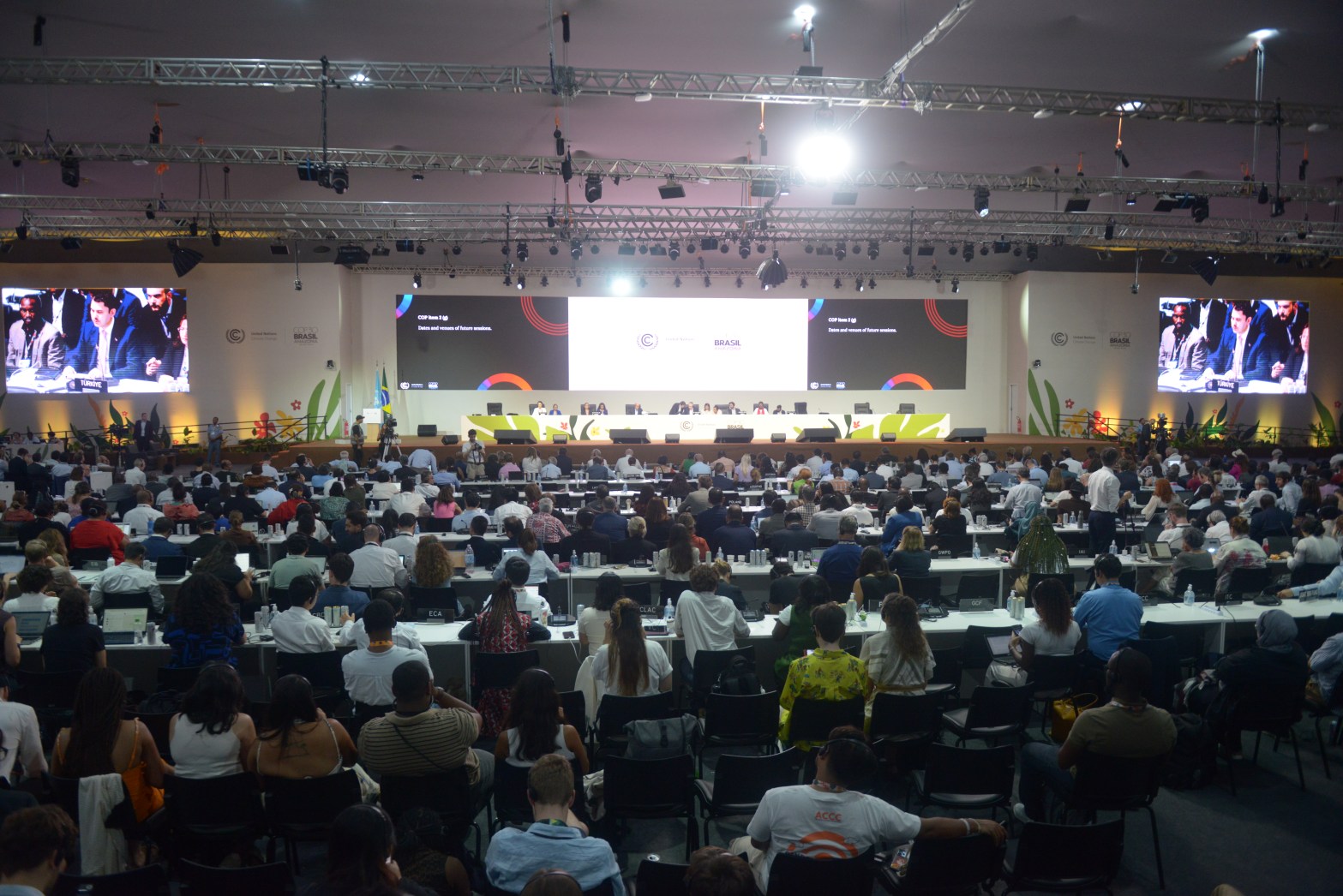
Without an agreement among the 195 delegations, the Brazilian solution was to push the issue to an alternative path, announced by Corrêa do Lago at the final plenary session on Saturday (22). Under his direct coordination, the COP30 presidency promised to deliver, by COP31 in Turkey, a technical document to support new discussions on the end of fossil fuels. The roadmap, however, is not binding on the Climate Convention and does not create obligations for the fulfillment of the Paris Agreement targets, serving only as a voluntary platform for dialogue between the countries that supported the initiative, something around 80 nations.
The first meeting of this group is scheduled for April 2026 in Colombia, during the first international conference dedicated to the transition away from fossil fuels.
During COP30 in Belém, Colombia gained prominence by declaring its entire Amazon region an oil-free zone during a meeting of ministers from the Amazon Cooperation Treaty Organization (ACTO). On that occasion, it challenged other nations that are home to the world’s largest tropical rainforest to follow suit.
Division exposed in the final plenary session
The solution found by the presidency of COP30 sparked immediate reactions during the final plenary. Countries like Colombia, Panama, and Uruguay demanded that the mention of the “transition away from fossil fuels, in a fair, orderly, and equitable manner” be kept in the mitigation program.
The Colombian negotiator interrupted the session and declared: “This is the COP of truth, the COP of trust, and it cannot support a result that ignores science.” She reminded the assembly that “almost 75% of global CO₂ emissions come from fossil fuels” and that “there is no mitigation if we cannot discuss the transition based on science and justice.”
In contrast, Saudi Arabia, Russia, India, and Nigeria reacted with irony and criticism to the Latin American pressure. The Russian representative accused the countries in the region of “behaving like children who want all the candy.” Nigeria stated that “the energy transition cannot be imposed” and must respect “national economic realities,” while India, on behalf of the BASIC group, a bloc of four recently industrialized countries (Brazil, South Africa, India, and China), rejected reopening the debate on fossil fuels.
Amid the debate, the UK Secretary of State for Energy Security and Zero Emissions, Ed Miliband, left the plenary session and summarized the ambiguity of the outcome to journalists: “I would have preferred that the transition away from fossil fuels had been included in the text, but key countries objected. Even so, there are sufficient elements in this agreement for Brazil to launch this crucial roadmap. It is progress, albeit limited.”

The European Union, for its part, advocated for continued discussions on the energy transition, but agreed to support the text of the climate agreement presented at the plenary session, known as the Belém Package, without mentioning fossil fuels.
“Science clearly tells us that global emissions need to drop much faster. Europe is doing its part. We had hoped that Belém would give us a global response to accelerate ambition and action, and show how we will close the gap to 1.5°C. The package before us is, to some extent, a missed opportunity. Still, the EU will not oppose this package.”
Brazil’s Minister of the Environment and Climate Change (MMA), Marina Silva, was the main advocate for the Brazilian proposal from the outset. In her closing remarks, she evoked the Rio-92 Conference, which gave rise to the COPs, and stated that if she could go back in time, she would tell herself that “urgency should prevail over any other interest.”
Although it has not yet been possible to reach a consensus for this call to be included in the decisions of this COP, the support it has received from many parties and from society strengthens the commitment of the current presidency to develop two roadmaps: one on halting and reversing deforestation and another on transitioning away from fossil fuels in a fair, orderly and equitable manner. Both will be science-driven and inclusive.”
Marina Silva, minister of the Environment
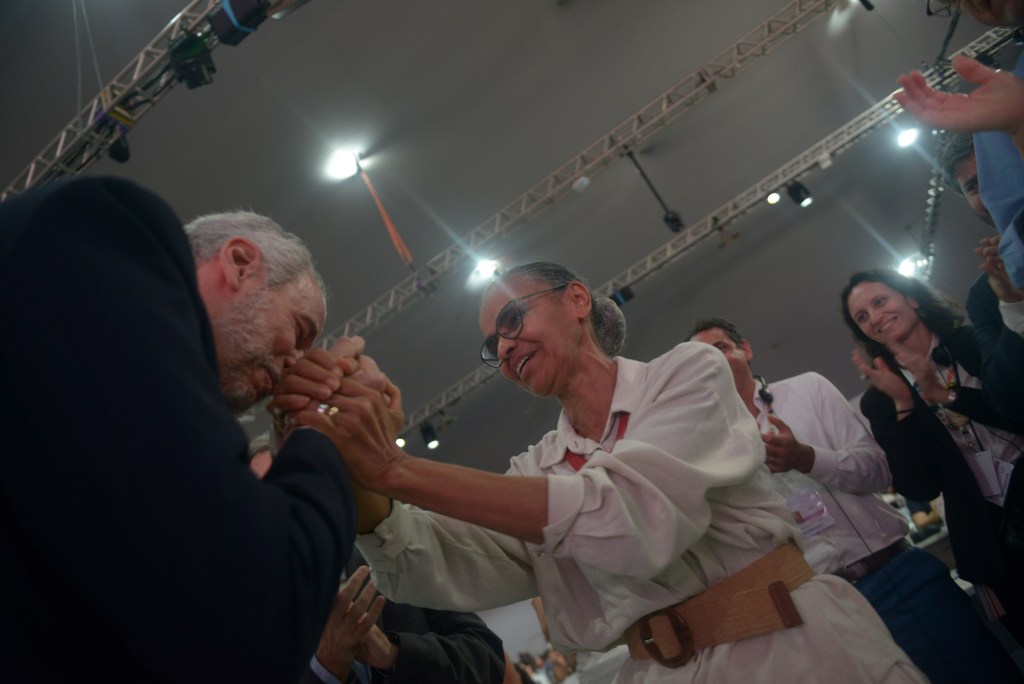
During her speech at the final plenary session of COP30, Marina received a standing ovation from representatives of the 195 nations, who gave her a standing ovation for more than three minutes.

Roadmap will bring together studies amid national dilemmas regarding exploration in the Amazon
The president of COP30, André Corrêa do Lago, stated that the roadmap will be developed based on studies already commissioned by the Ministry of the Environment (MMA) to define pathways for energy transition. “The objective is to build a robust technical document, based on evidence and dialogue between energy-producing and energy-consuming countries,” he explained.
According to the diplomat, Brazil intends to involve scientists and the oil industry itself in the plan’s development, with support from institutions such as the International Energy Agency (IEA), the International Renewable Energy Agency (IRENA), and even the Organization of the Petroleum Exporting Countries (OPEC), which, according to him, “has a lot of research on the subject.”
“We want to gather as much intelligence as possible about fossil fuels and organize this information through meetings, seminars, and studies,” said Corrêa do Lago.
According to André Corrêa do Lago, the roadmap’s development should be based on technical studies, including proposals already commissioned by the COP30 Presidency. InfoAmazonia has learned that one of these studies is the report “Transition from Fossil Fuels in Energy Systems,” prepared at the request of the Ministry of the Environment (MMA) and presented as input for the roadmap. The study was conducted by the consulting firm Catavento and supported by the Brazilian Institute of Petroleum, Gas and Biofuels (IBP), representing the oil sector, and the Climate and Society Institute (iCS). The second version, which also includes the coal sector, was delivered to the COP30 presidency in August of this year. It was mentioned by the COP30 president as an example of how the roadmap will be constructed, gathering as much information as possible on the subject.
“We have already started this study, the minister [Marina Silva] had already requested it, and Ana [Toni] had commissioned it. We began this study with a piece of work that I think showed us that it would be possible for us to do this. And more than possible, it’s extremely interesting. Because the first piece of work we commissioned already showed us the world in a different way,” announced Corrêa do Lago.
The study analyzes the ability of 11 countries to adapt their energy matrices and groups them into three categories, defined according to the urgency and feasibility of transitioning away from fossil fuels. In this set, Brazil is classified as having a “moderate potential for adaptation,” behind Germany, China, Canada, and the United States, which are considered the leaders in phasing out fossil fuels due to their economic autonomy and greater capacity to finance technologies for internal transitions in their countries.
At the other end of the spectrum among the countries evaluated, India, Saudi Arabia, and Nigeria are in the group of “adapters,” which, according to the study, require more support to advance in the energy transition.
In practice, this means that Brazil, which is trying to lead the global debate on the end of fossil fuels, would continue exploring for oil for several more years. This solution mirrors the internal dilemma of the Lula government regarding exploration in the Amazon estuary and the pressure from foreign companies such as the American firms ExxonMobil and Chevron, the main winners of the last auction on the Brazilian Amazon coast.
According to the COP30 presidency’s press office, the proposal is similar to the Baku-Belém roadmap, also approved as a side measure to the Azerbaijan convention last year (COP29), which brought together the efforts of the two nations in building a roadmap for climate finance to reach the $1.3 trillion needed to fund the fight against climate change. The roadmap brought together a series of studies, analyses, and research indicating how much the nations need to combat climate change and promote the energy transition.
A bittersweet outcome
The fossil roadmap proposed by Brazil survived politically, but left COP30 without normative strength.
According to Caio Victor Vieira, a climate policy specialist at the Talanoa Institute, “the COP ends with a bittersweet feeling.” Despite some progress in the debates on just transition, adaptation financing, and the revision of climate transparency mechanisms, he believes that the final text did not address the emergencies that require immediate responses.
Vieira points out that the Brazilian proposal, even if parallel, sends an important message about the situation of the member nations of the convention, but he is skeptical about the necessary results of the measure adopted.
“It opens up institutional processes that could end global problems once and for all, but it is still a very fragile sign that this will be done; it postpones this deadlock, which could be resolved here in Belém, to a process that will take at least a year. While it is historic, it is also a dilution over time that we can no longer afford,” analyzes the scientist from Talanoa.
According to Greenpeace, the outcome fell short of what was needed. “The Presidency’s decision to create two roadmaps — one for zero deforestation and one for ending fossil fuels — feels like a consolation prize. Of course, this will allow the work to continue next year and ensure that the momentum created in Belém is not lost. But it is not the progress we expected, and that the world desperately needs,” said Carolina Pasquali, director of the NGO in Brazil.
Still without a roadmap, the end of fossil fuels in Brazil remains undefined
When asked by InfoAmazonia about when Brazil would announce the end of fossil fuels as an example, based on the very stance it took at the global climate meeting, Minister Marina Silva said, in her final statement in the Blue Zone, that “President Lula himself has said that he is convinced we need to create roadmaps.”
“If you make the roadmap, it’s the studies — which are a very complex process — that will determine the timelines. If you state it a priori, you are disregarding that something of this nature and complexity can only be done based on data and evidence,” Marina Silva added.
On November 17th, the ANP (National Agency of Petroleum, Natural Gas and Biofuels) approved the inclusion of 275 new exploratory blocks for oil and gas exploration in the Permanent Concession Offer notice, including areas for exploration in the Amazon and other regions of the country.
So far, Brazil has not set a date to end its own exploration of fossil fuels.