
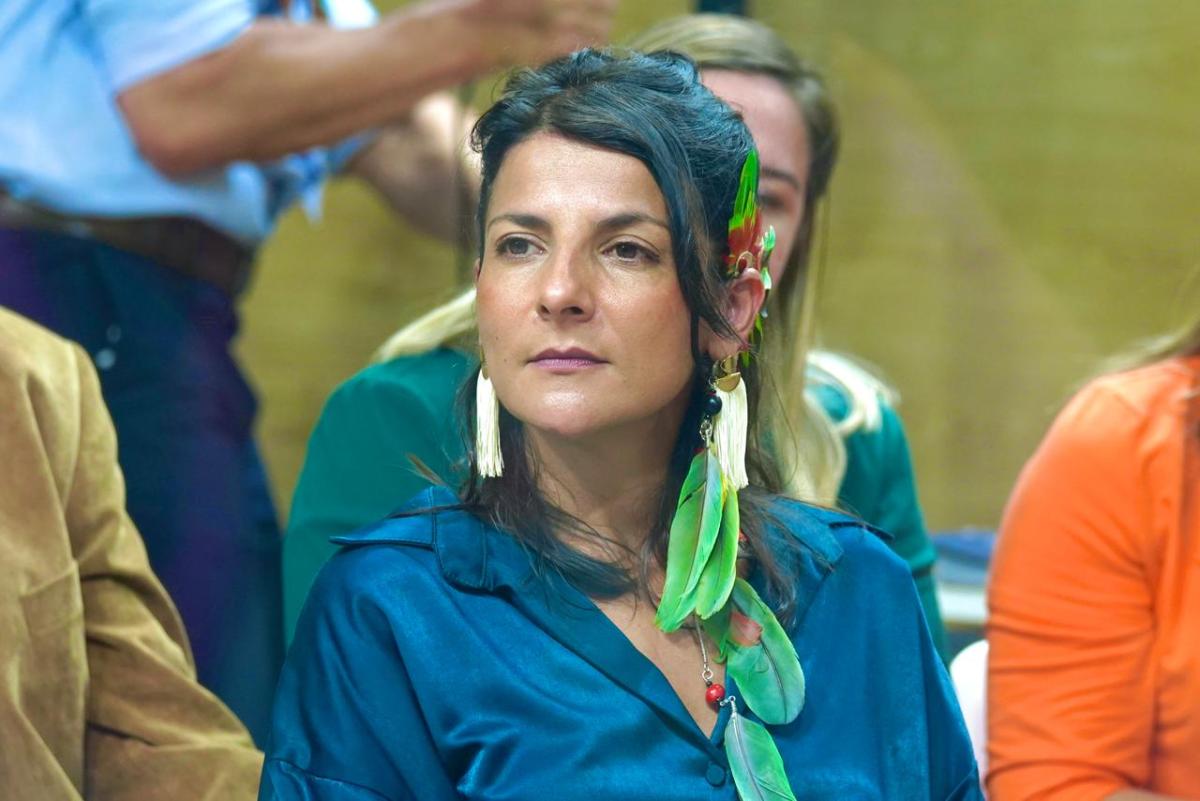
Colombia’s minister of environment and sustainable development, Irene Vélez Torres, made the announcement Thursday (Nov. 13) at a meeting of Amazon Cooperation Treaty Organization (ACTO) ministers during COP30.
In a historic gesture announced at the 30th United Nations Climate Change Conference (COP30), Colombia became the first Amazonian nation to make its entire Amazon biome off-limits to oil and large-scale mining. Irene Vélez Torres, minister of environment and sustainable development, presented the initiative during an ACTO ministers’ meeting.
Torres urged other countries to join Colombia and form an “Amazon alliance for life.” Her call adds pressure on neighboring nations just weeks after Brazil approved oil exploration at the mouth of the Amazon, in the form of state oil company Petrobras’s effort to drill Block 59.
Vélez Torres declared the entire Colombian Amazon a “reserve zone for renewable natural resources,” calling this an initial step in safeguarding the entire Amazon, which spans nine countries across South America.
“This is an act of environmental sovereignty and a fraternal call to our fellow Amazonian nations, because the Amazon knows no borders and its protection requires us to move forward together,” Vélez Torres said, standing alongside Marina Silva, Brazil’s environment and climate change minister (MMA).
The decision creates an unprecedented barrier to new mineral and oil extraction fronts, covering more than 48 million hectares—representing approximately 42% of Colombia’s continental territory and 7% of the South American Amazon. It also adds safeguards for the departments of Amazonas, Caquetá, Putumayo, Guaviare, Guainía, and Vaupés, which face threats from illegal road construction, land grabbing, mining, and mounting pressure from 43 oil blocks and nearly 300 mining applications that have not yet been authorized.
A call for an ‘Amazon alliance for life’
During the session, Vélez Torres invited ACTO ministers to build an Amazon alliance for life, proposing coordinated efforts in biodiversity, climate, water, and strategies to fight environmental crime. She urged leaders to make the forest “the heart of climate action and environmental justice.”
She emphasized that protecting the Amazon does not hinder development: “The forest is one. The rivers have no borders, and neither does life. Caring for the Amazon is not an economic sacrifice—it’s an ethical and scientific choice, a wager on the future of the region and of humanity.”
This commitment aligns with Colombia’s National Deforestation Containment Plan and the nation’s pledge to the 2015 Paris Agreement. It also advances the fair energy transition agenda of President Gustavo Petro’s administration, advocating internationally for a phased end to fossil fuels.
A Brazilian-style contradiction
During the meeting, Marina Silva reiterated President Lula’s (PT) proposal for a consensus-based COP30 roadmap to end fossil fuel use. Silva acknowledged the contradictions the sector had imposed on Brazil and stressed the urgent need for a programmatic agenda to end fossil fuel dependence.
Silva also called for cooperation to address “CO2 emissions from deforestation, coal, and oil,” but did not comment on Brazil’s recent decision to permit oil exploration off the Amazon coast.