

On the banks of the Rio Negro, Manaus residents take advantage of the grass that has appeared during the dry season, creating a space for relaxation. But as the river returns to its normal level, the vegetation could cause environmental imbalance and even spread disease.
On a Saturday afternoon during the Amazon’s dry season, dozens of Manaus residents flocked to the banks of the Rio Negro, in the capital of Amazonas, to enjoy the soft grass. Teenagers took advantage of the space to play soccer, while couples lounging in beach chairs listened to the bird calls that now mixed with funk music coming from speakers.
The new Manaus attaction brings an irony: despite being a “green” leisure space, it is the result of the historic drought that took the Rio Negro to the lowest levels in its history, leaving hectares of land exposed for grasses to flourish. The landscape includes rock formations and a view of the waters under the shadow of the Journalist Phelippe Daou bridge.
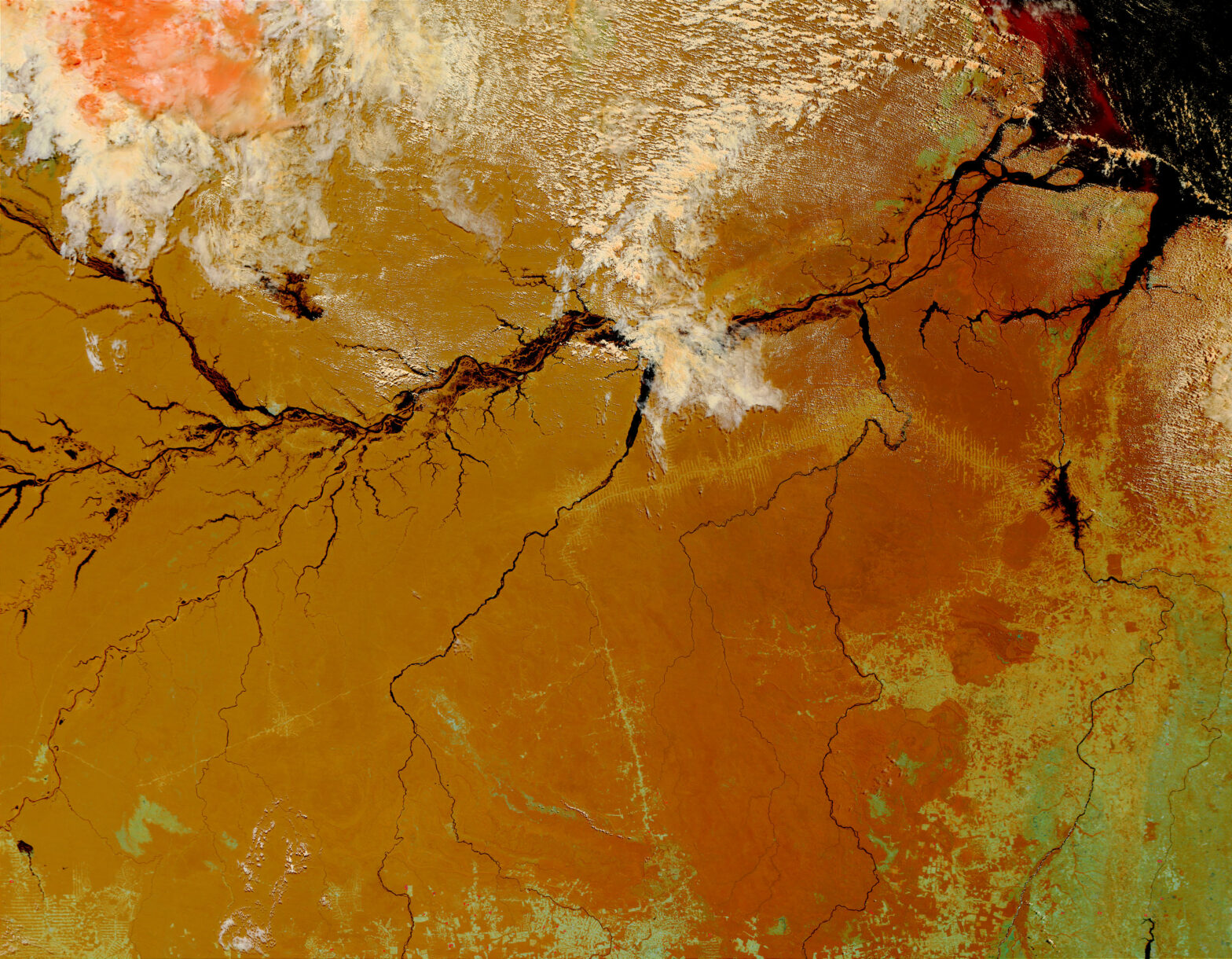
This year’s drought, an example of the impact that climate change could have on the Amazon in the coming years, has driven some of the region’s main rivers to their lowest levels in 122 years. The crisis has deprived communities of their only source of drinking water, income and transportation. According to the Brazilian Civil Defense, hundreds of thousands of people have been impacted by the drought in the state of Amazonas alone.
The negative impacts of the park

Manaus doesn’t have many green spaces like this new “park.” Despite being located within the Amazon biome, the city has one of the lowest tree canopy rates among Brazilian capitals and has only a handful of parks spread among its busy and congested roads.
In September this year, the residents of Manaus discovered the positive side of the grass that appeared near the Rio Negro and began crossing the Jornalista Phelippe Daou bridge, also known as the Rio Negro Bridge, to spend their free time beside the river. However, experts interviewed by InfoAmazonia warn that, as the river rises, the decomposition of grasses could unbalance the aquatic ecosystem and favor the spread of diseases.
Flávia Costa, a biologist at the National Amazon Research Institute (INPA), explained that the growth of grasses in previously submerged areas is a relatively common phenomenon in the Amazon. “All the time there are parts of the river being ‘broken’ and others being formed,” she said. “The natural process begins with grasses; then slightly larger plants appear, bushes, and, eventually, trees arrive…. So this is normal, there is no problem with this.”
However, it is uncommon for this phenomenon to occur on dry riverbanks that will soon be submerged again, such as in the area close to the bridge where the natural park was formed. “The extent to which this is happening now is out of the ordinary, as is the location,” Costa explained. “It is not a new beach that was formed, but an area that is normally underwater and that is only experiencing this colonization [of plants] because the river level has dropped too much.”
It is not a new beach that was formed, but an area that is normally underwater and that is only experiencing this colonization [of plants] because the river level has dropped too much.
Flávia Costa, a biologist at the National Amazon Research Institute (INPA)
When the river rises again, these grasses can block part of the water flow, creating breeding sites forf disease-carrying mosquitoes, according to Costa. Furthermore, the plants can make it difficult for sunlight to enter the river, causing significant changes to the ecosystem.
The decomposition of submerged grasses also reduces the oxygen and pH levels of the water, making it unsuitable for both human consumption and aquatic fauna. “It is not good water for fish, nor for most invertebrates,” she warned. Costa explained that some environmental impacts may be temporary, but the problems associated with them, such as the increase in mosquitoes and the potential for the emergence of diseases resulting from the consumption of non-potable water, can be long-lasting and need to be monitored by the government.
Temporary leisure and the importance of green areas
Manaus residents reported mixed feelings regarding the new park given the environmental circumstances that created it. Jovanio Gomes, who was on the riverbank teaching his son how to fish one November afternoon, said that despite the park’s pleasant environment, the drought brought “more harm than good.”
Anderson José, a resident of the city, said that “People in Manaus really miss an environment like this, where families can come, sit, talk and have fun.” He said that the natural park is “beautiful,” but “strange and also scary.”
According to Yêda Arruda, leader of the Trees of the Asphalt project, a research group at the Federal University of Amazonas (UFAM) dedicated to the study of urban vegetation, there are historical reasons why Manaus is not a tree-lined city. Originally, the European colonizers of the city associated vegetation with primitivism and began to plan the city “saying that progress is concrete.”
This early urban planning vision later combined with the city’s rapid and horizontal growth, which was largely unplanned, especially after the creation of the Free Trade Zone and the migration of rural workers to Manaus. “With this, a characteristic of [unauthorized] invasion was created in the city of Manaus,” said Arruda. This made it difficult for the government to later claim space from residents to build parks through the city.
“Parks create a harmonious natural environment close to the individual. Studies already show that these environments bring many benefits to humans, both for physical and mental health,” said Arruda. But the expert said that she was “sad” that the new park was only created due to an environmental crisis such as the recent drought.
Flávia Costa, from INPA, had the same view: “the population is so out of options that a disaster like the drought of 2023 and 2024 needs to happen for people to have a place to relax.”