

Collaborative, networked journalism to strengthen Amazon voices and connect territory, data, and public impact.
WHAT IT IS
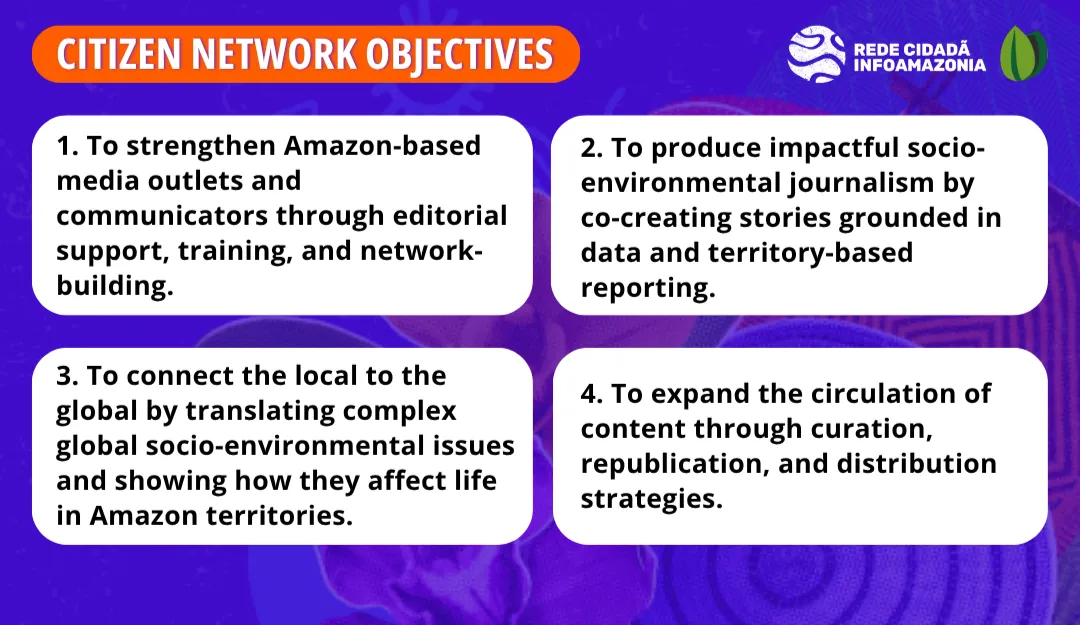
The InfoAmazonia Citizen Network is an initiative to strengthen Amazon socio-environmental journalism, based on collaboration among local and regional media outlets, co-created reporting, and the dissemination of content in the public interest.
The initiative connects newsrooms working across the Amazon territory with InfoAmazonia’s editorial and data infrastructure to produce in-depth reporting, expand the circulation of this information, and strengthen the institutional and editorial capacities of the outlets in the network.
WHY IT MATTERS
The Amazon is central to public debate on climate, territorial rights, and democracy, but journalism in the region still faces deep structural inequalities.
According to the Atlas da Notícia 2025, although the North is the country’s largest region in territorial extension and one of its most diverse in ethnic-cultural and environmental terms, it accounts for only 9.2% of Brazil’s journalistic outlets. This scenario reflects historic obstacles such as low connectivity, fragile infrastructure, and a lack of funding for local journalism.
The situation becomes even more critical when we see that 193 of the 450 municipalities in Brazil’s North are news deserts, meaning they have no local news outlet at all. This reduces the population’s access to public-interest information and weakens scrutiny over issues that are decisive for these territories.
The InfoAmazonia Citizen Network was created as a response to this context: a collaborative model that strengthens Amazon-based outlets, expands local production, connects territory and data, and helps bring the region’s agendas into national and global debate.
PROJECT PHASES
- 1. Ecosystem mapping (2022–2023): The Network emerged from a mapping of socio-environmental media outlets in the Amazon, which identified 282 outlets and helped visualize gaps, concentrations, and opportunities to strengthen journalism in the region.
__ - 2. Networked reporting pilot (2023): InfoAmazonia tested a collaboration model with Amazon-based outlets to experiment with co-creation workflows, joint editing, and content circulation.
__ - 3. Expansion and institutional strengthening (2024): The Network expanded its reach to 25 journalism initiatives across 8 Amazon states, with trainings, workshops, and an institutional and editorial strengthening program that supported selected outlets.
__ - 4. Toward COP30 and collaborative coverage (2025): The initiative entered a phase focused on climate coverage and preparation for COP30, with reporting grants, thematic trainings, and support for the production and dissemination of socio-environmental reporting produced in the territory.
HOW THE NETWORK WORKS
In 2025, the InfoAmazonia Citizen Network combined four lines of action:
1. Editorial co-creation
The special reporting series were developed collaboratively between InfoAmazonia (data gathering and analysis, visualization, and editing) and local outlets (territory-based reporting, sources, and context). This arrangement makes it possible to turn technical evidence into public narratives with strong local roots.
2. Support for local production
InfoAmazonia launched two reporting grant calls to support original stories produced by outlets in the Citizen Network, focusing on priority issues in the socio-environmental agenda and COP30. This model broadens the diversity of territories covered and strengthens local production through editorial support and coordinated circulation.
3. Training and exchange
The Network organized online trainings focused on the real needs of Amazon newsrooms, especially climate coverage and the challenges of covering an international event such as COP. This line of work grew in scale and reached journalists not only across Brazil, but also in newsrooms in other Latin American countries.
4. Dissemination and circulation
The Network combines curation, distribution, and content adaptation to expand the reach of stories. This line includes coordination with BioMedia, curation of partner content on InfoAmazonia’s channels, and adaptation for social media in collaborative formats.
IMPACT
In 2025, the InfoAmazonia Citizen Network consolidated a collaborative journalism model that combines data, local reporting, and networked circulation:
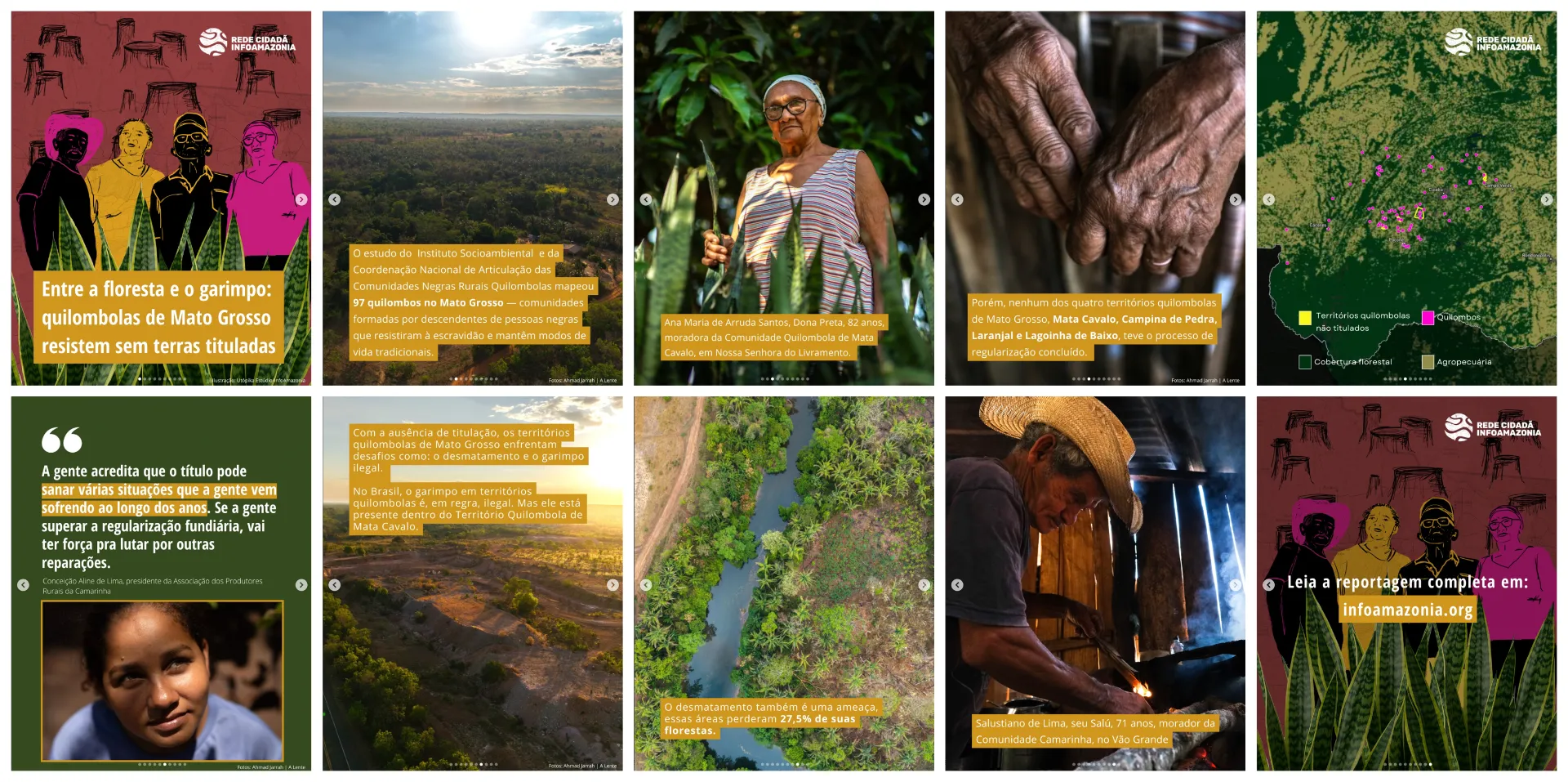
- 3 data-driven special journalism projects, with 16 stories in total: Invisible in the Smoke, Climate Vulnerable, and Amazonia Quilombola.
__ - 2 reporting grant calls, which resulted in 9 local stories connecting the COP30 agenda to concrete impacts in Amazon territories. 3 online trainings on COP30 and climate coverage, with strong reach: 921 registrants (introductory course), 128 registrants (remote coverage), and approximately 180 registrants (a three-session workshop on COP30 and territory).
__ - 6 outlets took part in the Collaborative Coverage of the House of Socio-Environmental Journalism at COP30, the largest collaborative effort in Brazilian socio-environmental journalism. Citizen Network outlets had their travel, accommodation, and per diem costs covered by the project.
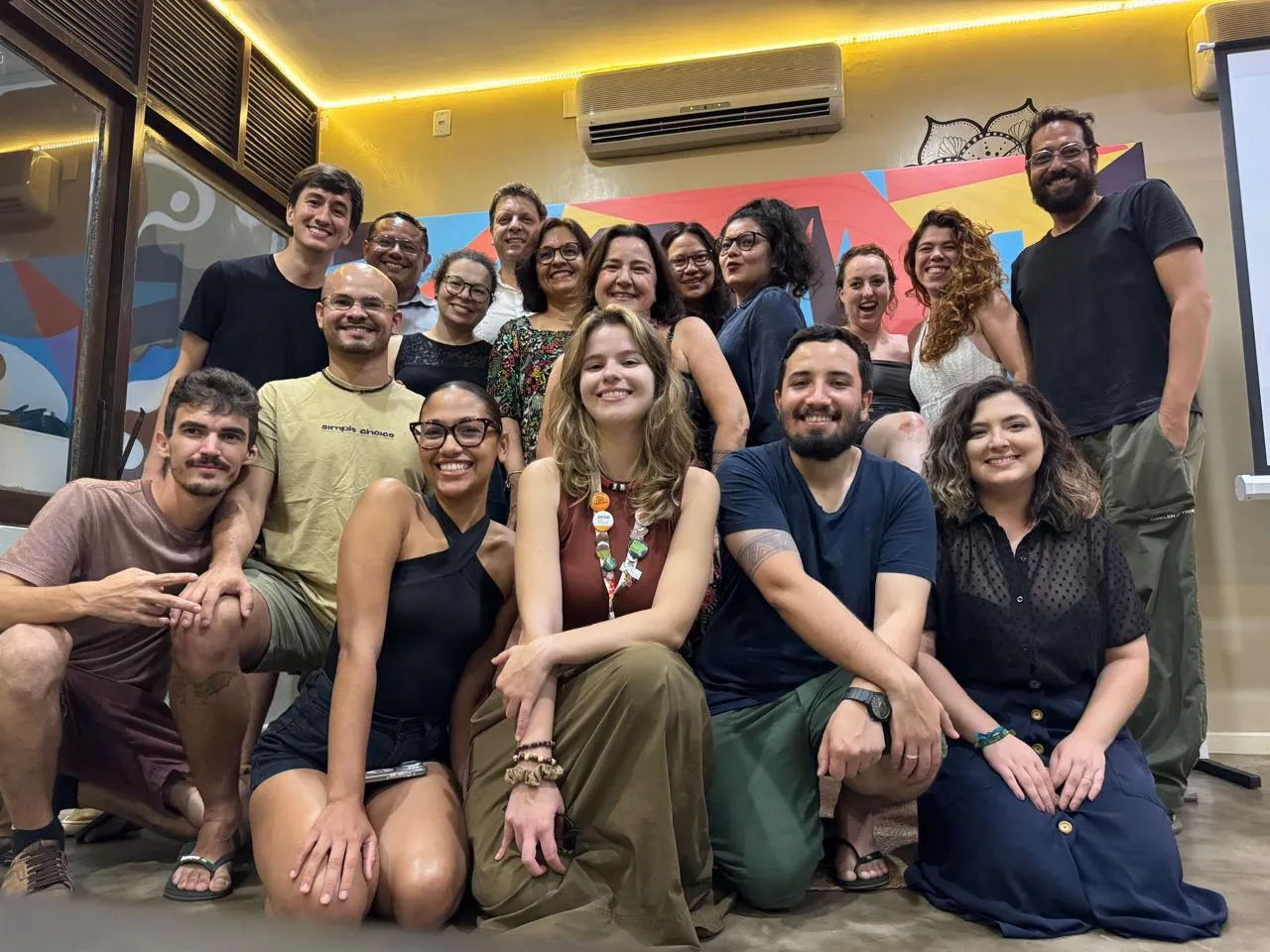
Beyond the numbers, the Network strengthened long-term ties among Amazon newsrooms and expanded the capacity for collaborative production between local outlets and InfoAmazonia, especially in coverage of climate and territorial justice.