


An unprecedented alliance for COP30 coverage in Belém
WHAT IT WAS
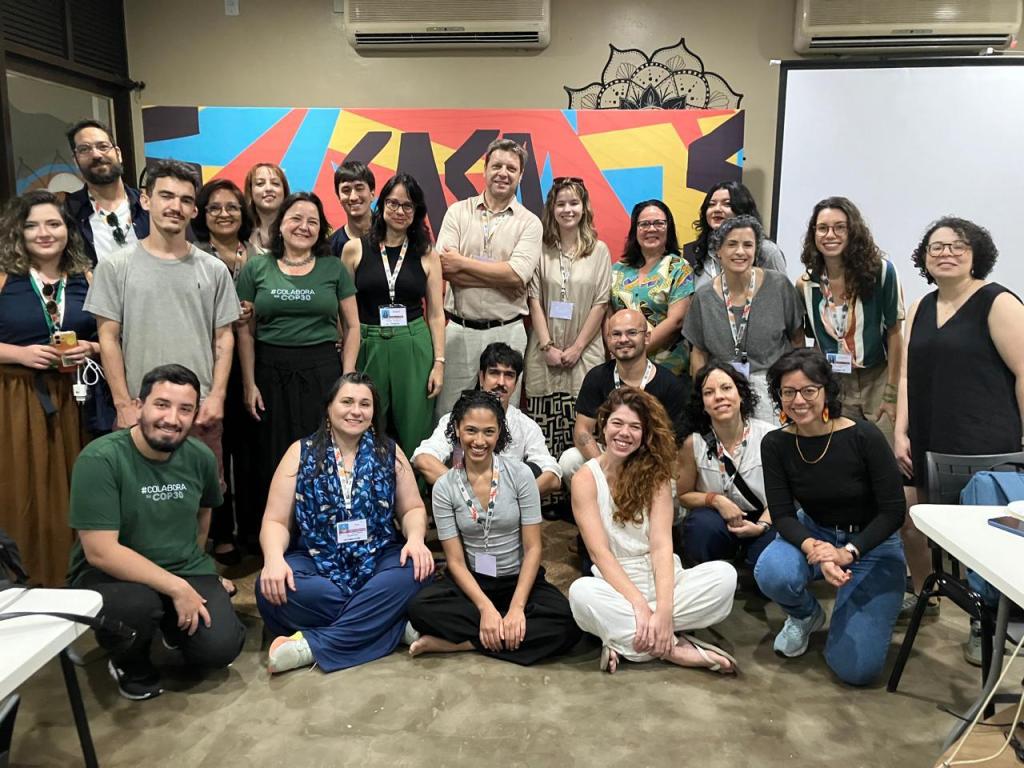
Throughout November 2025, the Socioenvironmental Journalism House operated in Belém as an editorial, logistical, and hospitality hub for journalists covering COP30. The space brought together specialized newsrooms, connected local and national teams, and enabled broad, high-quality, real-time collaborative coverage.
WHY IT MATTERS
The House reduced historic barriers to access in international coverage by providing work infrastructure and accommodation for reporters — many of them from media outlets based in the Amazon and the Cerrado. The model showed that it is possible to produce journalism with greater diversity of voices, cooperation across outlets, and a public-service focus.

WHO TOOK PART
The House initiative was conceived and organized throughout 2025 by the teams at InfoAmazonia, #Colabora, Envolverde, Eco Nordeste, ((o))eco, Amazônia Vox, Associação de Jornalismo Digital (Ajor) y Open Knowledge Brasil.
The following outlets also took part in the collaborative coverage: Agência Pública, Alma Preta, Ambiental Media, AzMina, Carta Amazônia, Ciência Suja, Intercept Brasil, Nexo, O Joio e O Trigo, Repórter Brasil, Revista Cenarium, Site Independente A LENTE, Agência Urutau, O Varadouro e Voz da Terra.
LEGACY
The House consolidated a new way of doing journalism: shared, collaborative, and decentralized — a model that can be replicated for major reporting efforts requiring territorial capillarity, speed, and depth. The project strengthened networks, improved the quality of information available to the public, and marked COP30 as one of the largest collaborative exercises in socioenvironmental journalism in Brazil.
Learn a little more about what this experience was like:
TEAM
Executive Director
Stefano Wrobleski
Project Coordinator
Thayane Guimarães
Project Assistant
Amanda Araújo
Live Feed Developer
Miguel Peixe
Translation and Distribution Editors
Jéssica Botelho
Nayra Wladimila
Translators
Verso Tradutores
Juliana Horta
Marly Moro
Glenda Vicenzi
Fabiana Diniz
Soledad Domínguez
Design
Aline Martins
Videography
Léo Bardy
Artur Bezerra Muniz
Local Production
Bianca D’Aquino
Carla Elloane De Oliveira
Food Services
Dinart Carvalho Buffet
Security Services
J M S Hunter
Transport Services
Higor Bartolomeu
Cleaning Services
Benedita Barreto Diniz
Walquíria Barreto Diniz
Electrical and Plumbing Installations
Douglas Pompeu
InfoAmazonia Editorial Director
Juliana Mori
InfoAmazonia Editing
Carolina Dantas
Samantha Rufino
Élida Oliveira
InfoAmazonia Social Media
Luiza Toledo
InfoAmazonia Photography
Luis Ushirobira
InfoAmazonia Reporting
Jullie Pereira
Fábio Bispo
Gabi Coelho
Meghie Rodrigues
Taís Gadea
InfoAmazonia Videography
Léo Bardy
Gabi Coelho
SUPPORT
The Socioenvironmental Journalism House was funded by the Climate and Land Use Alliance (CLUA), whose structural support made the initiative possible. It also received major support from Fundação Itaú and Instituto Clima e Sociedade (iCS).
The support network also included Amazon Conservation Association, Pulitzer Center, Greenpeace, Covering Climate Now, Heinrich Böll Foundation, the Amazon Institute of People and the Environment (Imazon), Oxfam Brasil, Ciência Hoje, Rosa Luxemburg Foundation, ITS Rio and the Initiative AdaptaCidades, implemented by Deutsche Gesellschaft für Internationale Zusammenarbeit (GIZ) GmbH and Brazil’s Ministry of the Environment and Climate Change (MMA), with funding from the International Climate Initiative (IKI) and the Green Climate Fund (GCF).
To reach international audiences, the project also had support from the agencies LatAm Intersect PR, Approach, Impronta Comunicación Estratégica, and Mullenlowe.
Gift this article